Somaliland a Hidden Gem of the Horn of Africa
By Abdul Rafay Afzal (Editor in Chief – The Advocate Post)
Hon. Jawhar Said Warsame serves as the Deputy Minister of Trade and Tourism of the Republic of Somaliland in the current administration. Official ministry materials and the cabinet announcement identify him in the ministry’s leadership at a time when Somaliland is seeking to strengthen its trade profile, improve the investment environment, and present tourism as a more structured pillar of economic growth.
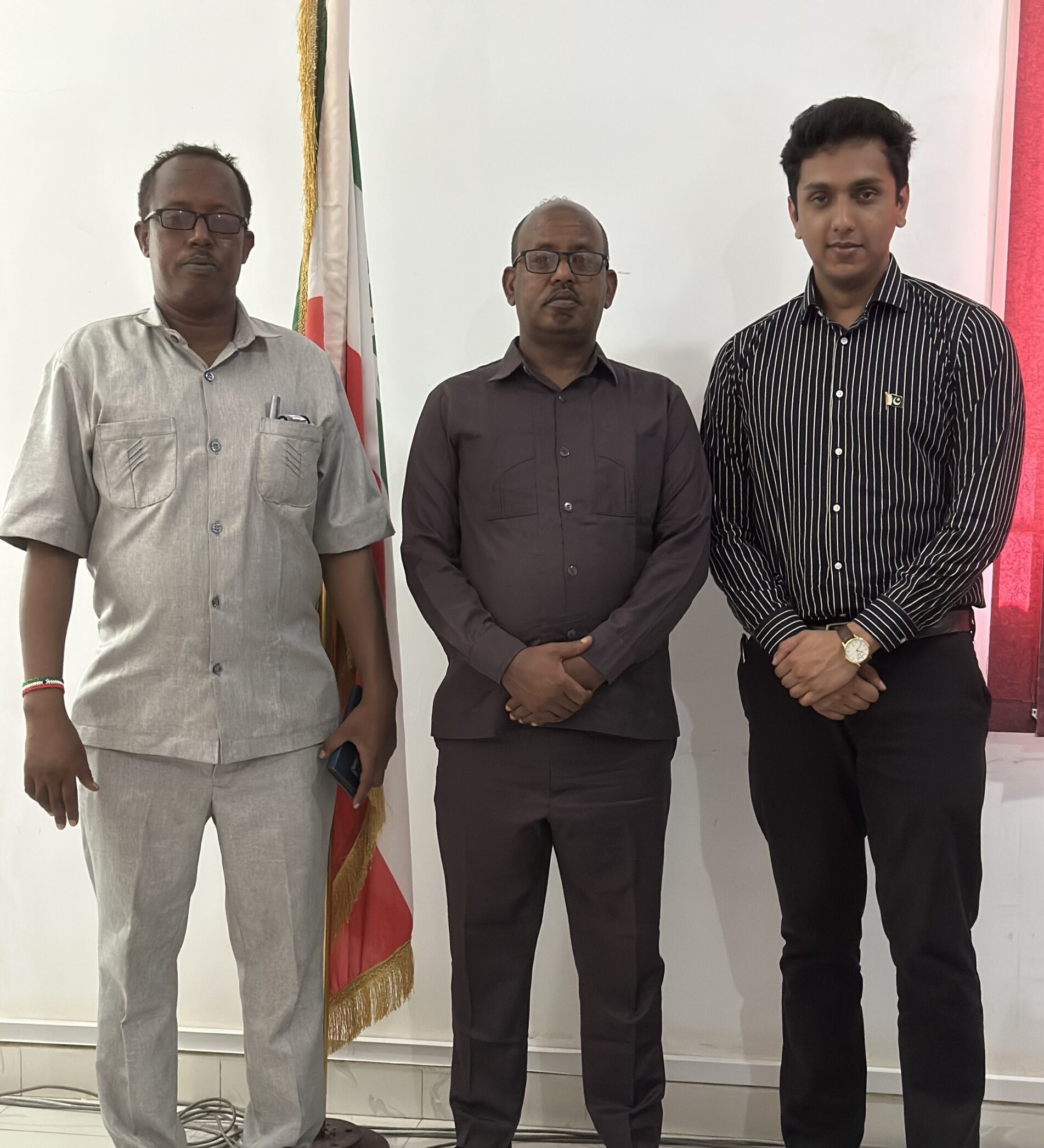
In this exclusive in-person interview with Abdul Rafay Afzal, Editor-in-Chief of The Advocate Post, conducted at the Ministry, Hon. Jawhar Said Warsame discusses Somaliland’s evolving trade and tourism agenda, the need to improve investor confidence, the strategic importance of regional connectivity, and the broader effort to project Somaliland as a credible destination for business and travel. He also reflects on plans to relaunch “Visit Somaliland” in a more professional and visible way in order to attract greater tourism interest and build a stronger international image for the country.
Executive Summary
In this Exclusive in-person interview with The Advocate Post, Hon. Jawhar Said Warsame, Deputy Minister of Trade and Tourism of Somaliland, outlines Somaliland’s vision for expanding trade, attracting investment, and repositioning tourism as a key driver of economic growth. He highlights the importance of improving the business environment, strengthening regional connectivity, and relaunching Visit Somaliland in a more structured and professional way to showcase the country’s heritage, natural beauty, and strategic potential to both regional and international audiences.
Q1: How do you define Somaliland’s current trade and tourism vision, and what are the top priorities your ministry is pursuing at this stage?
Our vision is to position Somaliland as a confident, open, and competitive economy that can serve both its own people and regional markets more effectively. We want a trade environment that is easier for businesses to enter, more predictable for investors, and more supportive of enterprise growth. At the same time, we want tourism to emerge as a serious pillar of national development, not merely as a symbolic sector, but as one that creates jobs, attracts foreign interest, and projects a positive image of Somaliland to the world.
At this stage, our priorities are clear. We are focused on improving the business environment, strengthening trade facilitation, promoting Somaliland internationally, and building a more structured tourism ecosystem around heritage, culture, nature, and hospitality. We are also working to ensure that our economic message is coherent: Somaliland is open for responsible engagement, serious partnership, and long-term growth.
Q2: Somaliland is often described as a place of untapped opportunity. Which sectors do you believe hold the greatest promise for trade and investment?
Somaliland’s promise lies in the combination of geography, resources, entrepreneurship, and strategic timing. Trade and logistics remain central because of our location on the Gulf of Aden and our role in regional commercial connectivity. Beyond that, tourism and hospitality have immense potential, especially when linked to our coastline, heritage assets, archaeological sites, and unique landscapes.
There is also room for growth in value-added sectors, light industry, services, and enterprises linked to travel, culture, and local production. What matters now is not only identifying sectors with theoretical promise, but building the policy and commercial conditions that allow those sectors to mature. We want investors to see Somaliland not simply as a frontier market, but as a place where early and serious engagement can produce meaningful returns over time.
Q3: What practical steps is the Ministry taking to improve the business environment for local entrepreneurs and foreign investors?
A strong economy begins with reducing friction for business. That is why institutional reform, licensing clarity, and administrative efficiency are so important. Somaliland has already developed an online business registration and licensing system as part of a wider strategy to strengthen the private sector, encourage growth, and reduce unnecessary delays and costs. The Ministry’s published guidance also indicates that, for standard cases, the licensing process can be completed in a day once the required documentation and fee requirements are met.
But reform is not only about systems. It is also about confidence. Investors want predictability, transparency, and responsiveness. So our work is not limited to forms and procedures; it also includes institutional coordination, policy improvement, and active engagement with the business community. We want both domestic and international partners to feel that Somaliland is serious about being investable, accessible, and commercially credible.
Q4: You have indicated that the government is preparing to relaunch “Visit Somaliland” in a more proper and strategic way. What will that relaunch mean in practical terms?
Yes, we want to relaunch Visit Somaliland in a more structured, visible, and professional manner. The idea is not simply to have a slogan or a website, but to build a real destination identity. We already have the foundations: Somaliland’s official tourism portal presents the country’s travel profile, including trip-planning information and destinations such as Laas Geel, Daallo, and coastal attractions. The next step is to transform that platform into a stronger campaign architecture that speaks to regional and international audiences more effectively.
In practical terms, that means better branding, better destination packaging, clearer information for travelers, stronger partnerships with tour operators and hospitality actors, more targeted promotion of priority sites, and more confidence-building around visitor experience. We want Visit Somaliland to communicate that Somaliland is not an unknown margin on the map, but a destination with history, authenticity, natural beauty, and serious tourism potential.
Q5: What makes Somaliland a distinctive tourism destination, rather than simply another emerging market trying to attract visitors?
Somaliland’s strength is that it offers a genuinely distinctive experience. This is not mass tourism built around imitation. It is a destination shaped by deep history, ancient civilization, archaeological significance, dramatic geography, living culture, and a long coastline. The official tourism materials emphasize exactly that combination: heritage, landscape, hospitality, and discovery.
A visitor can encounter rock art at Laas Geel, mountain landscapes in the east, coastal settings in places such as Berbera and beyond, and a cultural atmosphere that remains deeply rooted and welcoming. That combination gives Somaliland something increasingly rare in global tourism: authenticity. Our task as policymakers is to preserve that authenticity while making the sector more investable, more visible, and more professionally organized.
Q6: What are the biggest challenges currently holding back greater trade and tourism growth?
The challenges are real, and we should speak about them honestly. In trade, infrastructure, transit efficiency, market access, and perception remain important factors. In tourism, the challenge is not a lack of attractions; it is the need for stronger packaging, deeper investment in hospitality standards, more effective promotion, and broader international awareness. In both sectors, visibility matters. People do not invest in, travel to, or trade with places they do not understand.
At the same time, these challenges are precisely why this moment is important. Somaliland is increasingly articulating its economic story with more confidence. Recent developments in international engagement have also created new attention around Somaliland’s economic prospects, and that attention must now be converted into sustained partnerships, business confidence, and a more recognizable tourism profile.
Q7. How central is Berbera and wider regional connectivity to Somaliland’s long-term trade ambitions?
Berbera is central to our economic thinking. It is not only a port story; it is a corridor story. Ministry materials and official meetings around the Berbera Corridor underline the importance of infrastructure, transit arrangements, road connectivity, and the wider commercial framework that links Somaliland to regional markets. Recent official discussions have specifically referenced roads, the Hargeisa bypass, transit agreements, and trade arrangements as part of the Corridor agenda.
In the years ahead, Somaliland should be understood as a strategic connector. If we manage this correctly, Berbera and its surrounding trade architecture can deepen our role in regional supply chains, strengthen our position in cross-border commerce, and support a wider ecosystem of services, investment, and industrial opportunity. That is why connectivity is not a secondary issue for us; it is one of the foundations of our long-term economic model.
Q8: Many international partners ask about confidence, consistency, and safeguards. What message would you give to serious investors considering Somaliland?
My message is that Somaliland is looking for serious partners, not speculative engagement. We want investors who understand the value of long-term positioning and who are ready to work within an institutional framework. Our responsibility, as government, is to continue improving that framework through clearer procedures, better licensing systems, stronger coordination, and policies that support formal enterprise growth.
Confidence also comes from attitude. We are not approaching international engagement from a defensive position. We are approaching it with ambition. Somaliland has opportunities in trade, logistics, tourism, hospitality, resources, and services. What we seek is principled, mutually beneficial investment that contributes to jobs, capacity, and sustainable national development.
Q9: Tourism also depends on heritage, research, and cultural preservation. How important is that dimension to your ministry?
It is extremely important, because tourism without preservation is short-sighted. Our heritage is not only a cultural asset; it is also part of the intellectual and economic future of Somaliland. That is why cooperation around historical and archaeological research matters. In March 2026, for example, Somaliland’s Ministry of Trade and Tourism hosted researchers from Spain’s Institute of Heritage Sciences for work related to the history of the Adal and Ifat Sultanates, with an understanding to strengthen research, training, and protection of cultural heritage. I attended that meeting because this area deserves serious governmental attention.
The broader point is simple: if Somaliland is to build a credible tourism sector, it must also invest in protecting, documenting, and responsibly presenting its heritage. Visitors today increasingly seek meaning, not just movement. Heritage gives Somaliland that depth.
Q10: Finally, what message would you like to send to the international business and tourism community about Somaliland today?
My message is that Somaliland should be engaged on the basis of reality, not outdated assumptions. There is a serious economic conversation taking shape here. We are working to make business more efficient, tourism more visible, and international cooperation more productive. We want the world to see Somaliland as a place of possibility, seriousness, and strategic relevance.
For business leaders, investors, tour operators, researchers, and institutions, this is the time to look at Somaliland more carefully. We are building, reforming, and opening. And through trade and tourism alike, we want Somaliland to tell a larger story: that a confident, forward-looking nation can convert geography, heritage, and resilience into real economic opportunity.
Editorial Insight
This conversation with Hon. Jawhar Said Warsame reflects a broader effort by Somaliland to shape a more confident economic narrative through trade, connectivity, and destination branding. Of particular significance is the proposed relaunch of Visit Somaliland, which signals an intention to move beyond passive potential and toward a more deliberate effort to present Somaliland’s commercial and tourism value to wider regional and international audiences.
Disclaimer:
This interview was conducted in person by Abdul Rafay Afzal, Editor-in-Chief of The Advocate Post, at the Ministry. The views expressed are those of the interviewee and are published for journalistic and public-interest purposes providing a platform for perspectives on public policy, governance, and international issues. All efforts have been made to present the responses accurately and in context. They do not necessarily represent the editorial position of The Advocate Post.
Abdul Rafay Afzal is the Editor in Chief of The Advocate Post, recognised as Pakistan’s youngest international journalist. He writes perceptive columns on geopolitics, international relations, and legal affairs etc. in more than 15 countries. Moreover he is a lawyer, global affairs & policy advisor, President (Youth) Civil Society Network Pakistan and Consutant (International Cooperation and Media Diplomacy) Lahore Press Club. He can be reached at @arafzal555 on instagram or email abdulrafayafzal@theadvocatepost.org


This Post Has One Comment
The idea of strengthening regional connectivity to boost investor confidence is something I hadn’t considered deeply before, but it makes perfect sense. It’s exciting to see the government prioritize both the business climate and tourism development as complementary pillars of growth.