By Abdul Rafay Afzal (Editor in Chief – The Advocate Post)
Smart Governance, Sustainable Cities & the Future of Punjab
Exclusive Interview of Hon. Mian Zeeshan Rafique, Provincial Minister for Local Government and Community Development, Punjab, Pakistan
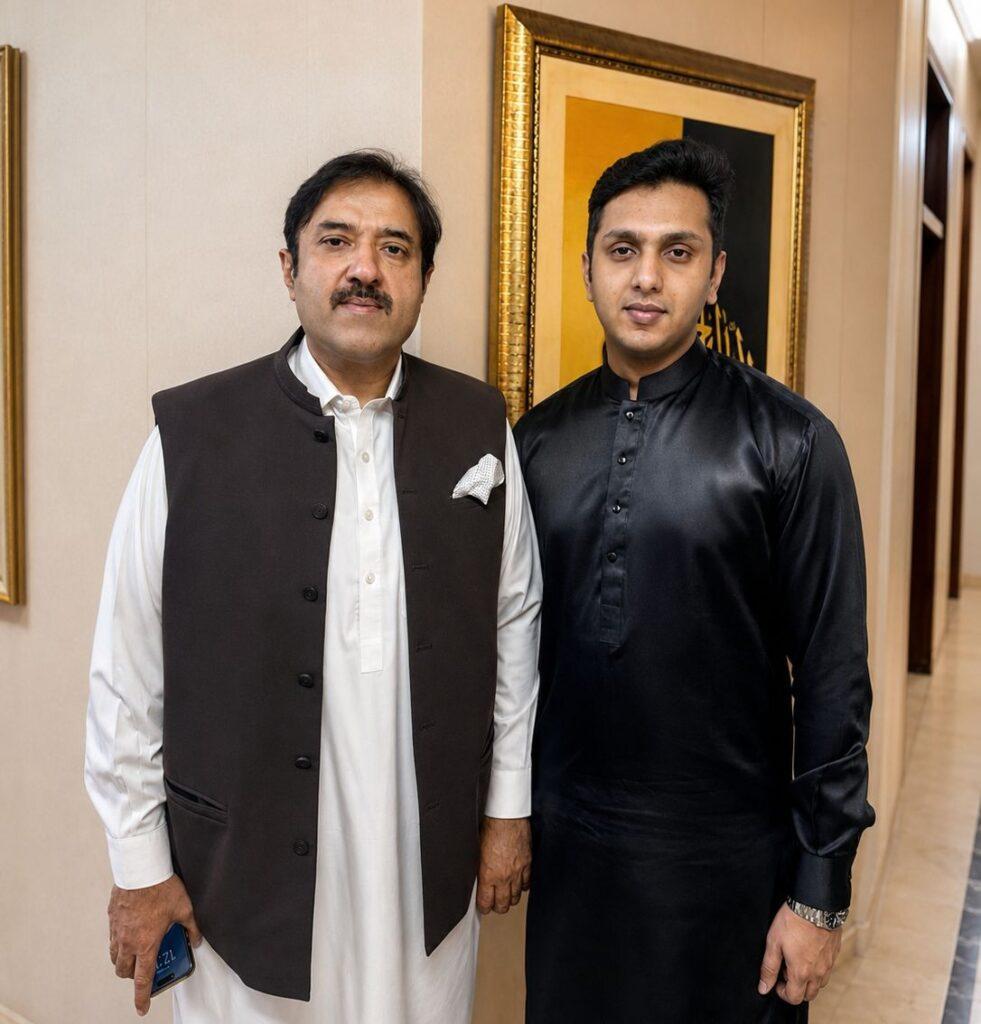
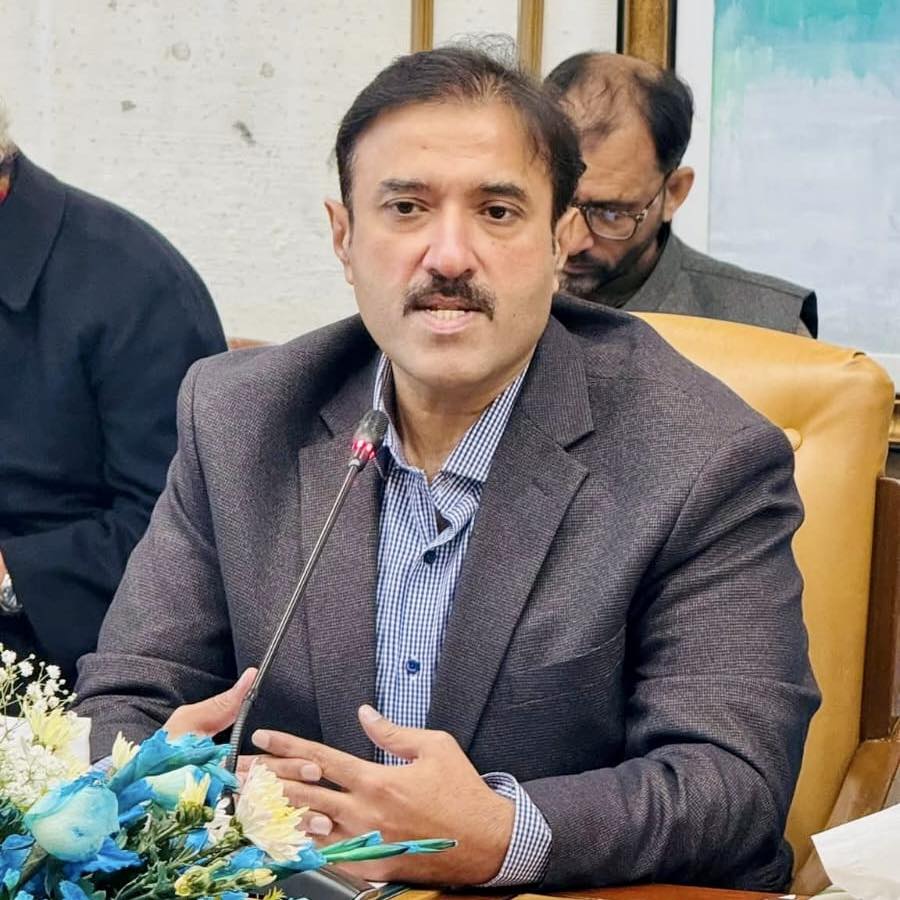
As Punjab undergoes one of its most ambitious urban transformation drives in recent history, Editor in Chief of The Advocate Post, Abdul Rafay Afzal sat down with Punjab Minister for Local Government, Hon. Mian Zeeshan Rafique, to discuss the province’s evolving development vision, smart city ambitions, local governance reforms, international cooperation, and the future of sustainable urban planning under the leadership of Chief Minister Maryam Nawaz Sharif.
From underground water storage systems and AI-powered spatial planning to model villages and global municipal partnerships, the conversation reflects how Punjab is attempting to redefine governance and infrastructure for the next generation.
Executive Summary
Punjab Minister for Local Government Zeeshan Rafique, in an exclusive interview with The Advocate Post, outlined the Punjab government’s ambitious vision for sustainable urban transformation, smart governance, and modern local administration under Chief Minister Maryam Nawaz Sharif’s “Beautiful Punjab” initiative. Discussing major projects including the Punjab Development Program (PDP), Lahore Development Program (LDP), and Model Village schemes, the minister highlighted ongoing efforts to modernize sewage infrastructure, prevent urban flooding, digitize land-use monitoring through Artificial Intelligence, and expand city-like facilities to rural areas. He also emphasized the importance of international cooperation, expressing openness to collaboration with European municipal institutions, the Congress of Local and Regional Authorities of the Council of Europe, and sister-city partnerships to position Punjab’s cities as globally connected and future-ready urban centers.
Q1: Punjab is currently witnessing large-scale urban development initiatives under the Maryam Nawaz’s Vision of Punjab. How would you define the broader philosophy behind these reforms?
The broader philosophy is very simple: development should not remain limited to a few urban centers or elite localities. Chief Minister Maryam Nawaz Sharif believes governance must directly improve the daily lives of ordinary citizens, whether they live in Lahore, a secondary city, or a remote village.
Under the Punjab Development Program (PDP), Lahore Development Program (LDP), and the Model Village initiatives, we are focusing not only on roads and infrastructure but also on systematic urban transformation. For the first time, comprehensive master planning for cities up to 2050 has been prepared. We are introducing modern sewage systems, underground water storage infrastructure, desilting mechanisms, and climate-resilient municipal systems.
This is not cosmetic development. It is structural reform aimed at creating sustainable, organized, and livable cities for future generations.
Q2: Urban flooding and poor sewage systems have historically been major challenges in Punjab. What practical measures are being implemented to address these issues?
Unfortunately, many cities in Punjab developed without proper sewage planning for decades. In some cities, there was virtually no functioning drainage system at all. That is why we prioritized the worst-affected urban areas in the first phase of the PDP.
Currently, thousands of kilometers of sewer lines are being constructed or rehabilitated. We are also establishing roadside and underground water storage tanks capable of storing millions of gallons of rainwater. These systems will significantly improve drainage during monsoon seasons and help prevent urban flooding.
Additionally, we are procuring modern suction, jetting, and desilting machinery for municipal operations. Technology transfer for lining pipes has also been introduced in Pakistan to improve durability and efficiency.
The objective is to move away from temporary patchwork solutions toward permanent urban resilience.
Q3: The Punjab Spatial Planning Authority (PSPA) has recently emphasized Artificial Intelligence and digitization. How important is technology in your governance model?
Technology is now central to governance worldwide, and Punjab cannot remain behind. The Punjab Spatial Planning Authority is gradually shifting monitoring and land-use systems toward AI-driven oversight and digital planning.
The Planning Support System (PSS) has already been linked with the Punjab government’s e-Biz portal, allowing applications for residential schemes to be submitted online. Digitization enhances transparency, reduces corruption, improves efficiency, and allows us to detect violations more effectively.
We want Punjab to move toward modern smart-city governance where urban planning, infrastructure monitoring, and municipal services are data-driven rather than reactive.
The future belongs to smart governance, and Punjab must prepare accordingly.
Q4: You have spoken previously about learning from international experiences. How important is global cooperation in Punjab’s local government vision?
International cooperation is extremely important because urban challenges today are global in nature. Whether it is climate resilience, public transport, heritage preservation, sewage management, or digital governance, cities across the world are learning from one another.
I had the opportunity to visit Germany and observe advanced municipal systems and urban management models. There is much Punjab can learn from European experiences, particularly regarding sustainable urban planning and institutional efficiency.
We are also interested in strengthening engagement with international bodies such as the Congress of Local and Regional Authorities of the Council of Europe. I personally believe there is significant room for cooperation, dialogue, and exchange of expertise between Punjab and European local governance institutions.
We would warmly welcome the possibility of hosting Marc Cools in Lahore, or alternatively visiting Strasbourg for institutional engagement and exchange. Punjab has much to learn, but we also have experiences worth sharing.
Q5: Punjab has also shown interest in sister-city and international municipal partnerships. How do you view these initiatives?
Sister-city partnerships are not merely symbolic arrangements anymore. They can become platforms for investment, tourism, technology exchange, education, municipal training, and cultural diplomacy.
Punjab already has a history of such cooperation. Recently, Punjab further expanded cooperation efforts with Chinese provinces and cities, including developments regarding Zhejiang Province and multiple municipal-level sister-city initiatives.
We would like to expand these partnerships further for cities across Punjab. Lahore, Faisalabad, Rawalpindi, Multan, Bahawalpur, and other cities possess enormous potential for international collaboration.
The objective is to position Punjab’s cities as globally connected urban centers capable of attracting innovation, investment, and institutional cooperation.
Q6: The Model Village Program has attracted significant public attention. What distinguishes this initiative from previous rural development projects?
The difference is scale, planning, and intent.
Traditionally, villages were often ignored in long-term development planning. Under Chief Minister Maryam Nawaz Sharif’s vision, we are trying to provide city-like facilities to rural populations while preserving the social fabric of village life.
In the first phase alone, hundreds of villages have been selected, benefiting millions of residents. The program includes paved streets, sewage systems, street lighting, restoration of ponds, drainage systems, and improved municipal services.
Importantly, this is not a short-term political exercise. We are developing long-term rural transformation through structured planning and phased expansion. Eventually, thousands more villages will be included.
Q7: Critics often argue that Pakistan’s local government systems lack continuity and institutional strength. How do you respond to those concerns?
Strong local governments are essential for democratic governance and efficient service delivery. The Pakistan Muslim League-N has historically believed in strengthening local bodies rather than weakening them.
The current government has worked seriously on legal and administrative frameworks for local government reforms. Delimitation work has been completed within the required timelines, and institutional preparations continue.
At the same time, local governments must evolve beyond political slogans. They require proper legislation, administrative clarity, financial sustainability, and technological modernization.
We are trying to create systems that are sustainable, functional, and future-oriented rather than temporary arrangements.
Q8: Finally, how do you envision Punjab’s cities over the next decade?
I envision Punjab as a province of organized, connected, environmentally sustainable, and technologically modern cities.
Our goal is not merely urban expansion but urban transformation. We want cleaner cities, better infrastructure, efficient drainage systems, digitized municipal services, green spaces, restored heritage, and smart planning mechanisms capable of serving future generations.
Punjab possesses enormous human and economic potential. If governance remains consistent and development continues systematically, I believe Punjab can emerge as one of South Asia’s most dynamic regional models for urban and local governance reform.
The journey has begun, and we intend to continue moving forward with seriousness and commitment.
Abdul Rafay Afzal is the Editor in Chief of The Advocate Post, recognised as Pakistan’s youngest international journalist. He writes perceptive columns on geopolitics, international relations, and legal affairs etc. in more than 15 countries. Moreover he is a lawyer, global affairs & policy advisor, President (Youth) Civil Society Network Pakistan and Consutant (International Cooperation and Media Diplomacy) Lahore Press Club. He can be reached at @arafzal555 on instagram or email abdulrafayafzal@theadvocatepost.org
Editorial Insight:
Punjab’s evolving development framework reflects a significant shift from reactive governance toward long-term urban planning, digital administration, climate resilience, and infrastructure modernization. The emphasis on smart-city models, AI-driven spatial planning, and international municipal cooperation indicates an attempt to position Punjab within a broader global conversation on sustainable local governance and future-ready urban transformation.
Disclaimer:
The views, statements, and policy positions expressed in this interview are solely those of the interviewee and are published as part of The Advocate Post’s commitment to public discourse, governance dialogue, and journalistic engagement. Publication of this interview does not necessarily constitute institutional endorsement of all opinions or claims presented therein.