History, Thought, Sacrifice and Message For the Future
By Abdul Rafay Afzal (Editor in Chief – The Advocate Post)
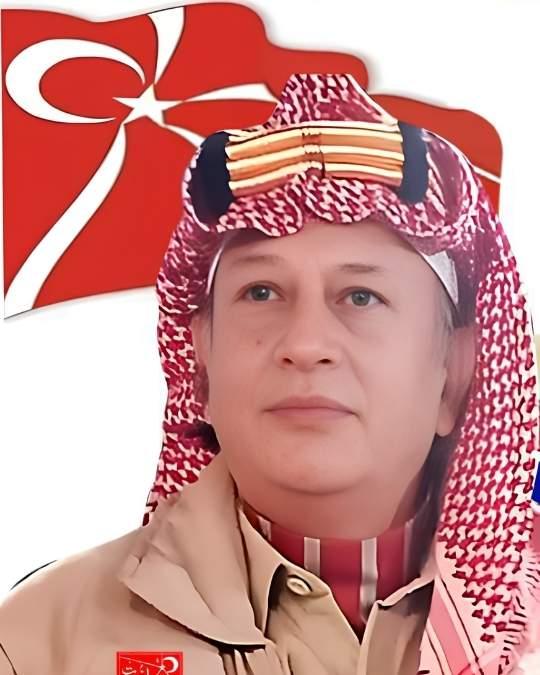
Dr. Professor Hakeem Syed Nasar Askari is the Ameer of the Khaksar Tehreek and belongs to a distinguished scholarly and medical family associated with traditional medicine, public service and reformist thought. His family elders were remembered with titles such as Masih-ul-Hind and Haziq-ul-Hind. Dr. Askari has remained closely connected with the intellectual legacy of Allama Inayatullah Khan Mashriqi and continues to speak on the movement’s message of discipline, service, civic responsibility and national character-building.
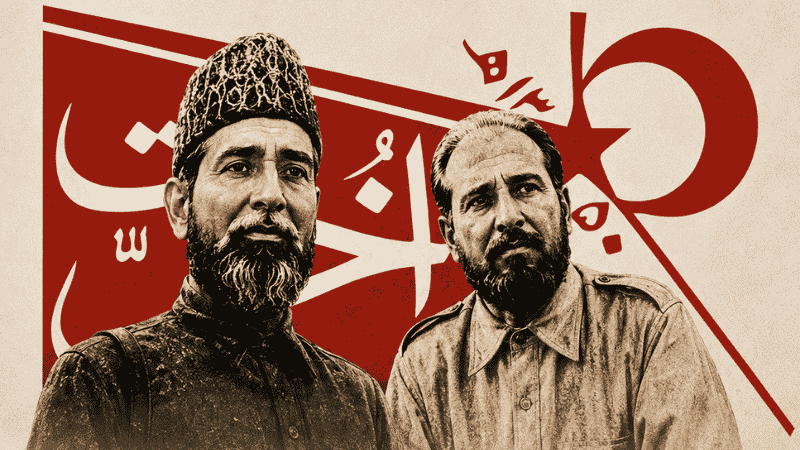
The Khaksar Tehreek was founded by Allama Inayatullah Khan Mashriqi in 1931 as a disciplined socio-political and reformist movement in British India. Its central ideas included humility, equality, public service, discipline, obedience and resistance to colonial rule. The movement became widely recognised for its uniformed volunteers and the spade, which symbolised labour, service, unity and strength. Its history remains an important but often under-discussed chapter of the subcontinent’s freedom struggle and Muslim political awakening.
Executive Summary
In an in-person Exclusive interview with The Advocate Post, Professor Dr. Hakeem Syed Nasar Askari, Ameer of the Khaksar Tehreek, reflected on the movement’s history, ideology and relevance for Pakistan today. He discussed Allama Inayatullah Khan Mashriqi’s vision of discipline, humility, service, civic responsibility and national character-building, while also highlighting the symbolism of the spade, the sacrifices of 19 March 1940, and the need to preserve the movement’s intellectual and historical legacy. Dr. Askari argued that the Khaksar Tehreek should not be seen merely as a movement of the past, but as a continuing reformist message for youth, community service, social order and collective responsibility in contemporary Pakistan.
Q1: How would you explain the Khaksar Tehreek to today’s generation?
The Khaksar Tehreek is a human, intellectual, reformist and revolutionary movement. Its foundations are service to humanity, sacrifice, discipline, obedience, courage, faith and national training.
It was not merely a political party or a conventional organisation. It was a complete organised system whose purpose was to awaken the nation, strengthen it, develop moral, intellectual and practical training within it, and place it on the path of service.
The character of the Khaksar Tehreek is based on faith, conviction, patience, gratitude, obedience and courage. These are the qualities that lead any nation towards greatness, stability and awakening.
Q2: How did your association with the Khaksar Tehreek begin?
My association with the Khaksar Tehreek began at a very young age. My father had a close relationship with Allama Inayatullah Khan Mashriqi and the Khaksar Tehreek. Whenever he visited Allama Mashriqi, he would take me along with him.
At that time, I was around four, five or six years old. I would sit in Allama Mashriqi’s gatherings, stay close to him, and in this way my early intellectual training began in his environment. Allama Mashriqi would seat me in his lap, keep me with his children, and explain to us, according to our young age, matters of faith, purpose in life, discipline, service, sacrifice and the elevation of the nation.
At that time, Allama Mashriqi’s sons were also present there. As small children, we would carry small wooden spades and march. Allama Mashriqi himself would train us, make us march, and then affectionately give us dates, roasted gram and jaggery.
I can say that my intellectual training began in the lap of Allama Mashriqi. His thought is embedded in my being, and I remain committed to that thought to this day.
Q3: Under what circumstances did Allama Inayatullah Khan Mashriqi establish the Khaksar Tehreek?
Allama Inayatullah Khan Mashriqi founded the Khaksar Tehreek at a time when India was under British rule. Muslims had lost political power, their strength had been weakened, and they were being made socially and militarily helpless.
The British had taken weapons away from Muslims and weakened them. At that time, different communities were struggling for India’s freedom, but there was no organised platform that could carry the freedom struggle forward with discipline, sacrifice, service and practical action.
Allama Mashriqi established the Khaksar Tehreek for this very purpose. It was a freedom-fighter movement, an organised platform that prepared the people with discipline, service, sacrifice and the spirit of freedom.
The Khaksar Tehreek spread rapidly across different parts of India. The reason for its popularity was its discipline, simplicity, service, purpose and public character.
Q:4 What is the deeper philosophy behind the word “Khaksar”?
The word “Khaksar” contains within it the meanings of humility, service, discipline, strength and unity. A Khaksar is one who removes ego and stands for the service of the nation, humanity and faith.
The real philosophy behind this word is connected with the Sunnah of the Holy Prophet ﷺ, the character of the Companions, service to humanity, sacrifice, obedience and courage. The purpose of the Khaksar Tehreek was to prepare individuals who would rise above personal interest and work for humanity, justice and the elevation of faith.
Khaksar is not merely a name. It is a character, a training and a way of life.
Q:5 The identity of the Khaksar Tehreek is closely associated with the spade. What does this symbol mean?
The spade is the most prominent symbol of the Khaksar Tehreek. Its meaning is not limited to that of a tool. It represents service, labour, defence, discipline, simplicity and humility.
When the British took weapons away from Muslims, Allama Mashriqi adopted the spade as a symbol that could not easily be banned. The spade was an ordinary tool, but it carried very deep meaning.
The spade is used for cleaning, digging trenches, serving people, and it is a symbol of labour. In times of need, it can also become a means of defence. Its meaning is also connected with the historical background of the Battle of the Trench.
For the Khaksar Tehreek, therefore, the spade is a symbol of service, labour, protection, practical struggle and association with the Sunnah of the Holy Prophet ﷺ.
Q:6 How do you view the events of 19 March 1940?
19 March 1940 is a deeply important and painful day in the history of the Khaksar Tehreek. On that day, 313 Khaksars carried out an organised march in Lahore. Their purpose was to protest against the ban imposed by the government on the Khaksar Tehreek and to demand that it be lifted.
At the same time, restrictions were also being placed on religious freedom and public assembly. The Khaksars were moving towards the Badshahi Mosque to offer prayers and to register their protest peacefully.
On that occasion, the British officer Colonel Beaty and other police officials attempted to stop them. The position of the Khaksars was that they were going to pray and protest peacefully, and that their religious freedom should not be restricted.
After this, the situation became tense and firing was opened on the Khaksars. A large number of Khaksars were martyred and injured. Historical sources mention different numbers of martyrs, but it is an established fact that this incident remains one of the great sacrifices of the Khaksar Tehreek.
My father used to tell me that after this incident, Quaid-e-Azam Muhammad Ali Jinnah visited the wounded Khaksars. He appreciated their sacrifice and said that the sacrifice they had given for the homeland would not go to waste. This event is an important part of our history and cannot be forgotten.
Q:7 How would you describe Allama Mashriqi’s thought?
Allama Inayatullah Khan Mashriqi’s thought was very broad. He was not merely a political leader; he was a thinker, scholar, scientist, mathematician and nation-builder.
He did not view Islam as limited only to acts of worship. He saw it as a complete system of life: a system that includes discipline, justice, knowledge, research, military training, collective life, service to humanity and human welfare.
Allama Mashriqi used to teach young people that a human being does not come into this world without purpose. Every person is born for a special purpose and must search for that purpose. He believed that nations are built through purpose, discipline, sacrifice, knowledge and character.
The military discipline, leadership, justice, sacrifice and service to humanity found in the life of the Holy Prophet ﷺ formed a foundation of Allama Mashriqi’s research and thought. In his view, the Islamic system gives human beings justice, rights, peace and the strength to stand against oppression.
Q:8 What is the importance of Allama Mashriqi’s intellectual work and writings?
Allama Mashriqi’s intellectual stature was very high. His writings contain deep thought on religion, science, the universe, humanity, society, politics and nation-building.
Among his important works are Tazkirah, Isharat, Khutba-e-Misr, Maulvi Ka Ghalat Mazhab, Armaghan-e-Hakim and other writings. In Tazkirah, he reflected on the relationship between the Qur’an, science, religion and the universe. His intellectual approach was that human beings must understand the universe, adopt knowledge, and organise their collective life under purpose, discipline and justice.
His address The Human Problem is also an important intellectual document. In it, he discussed the problems of humanity, war, destruction, knowledge, research and human welfare. He wanted humanity to move away from destruction and the race for atomic power, and instead turn towards understanding the universe, knowledge, justice and service.
Even today, Allama Mashriqi’s books remain important reading for the new generation, researchers and scholars.
Q:9 Do you believe Allama Mashriqi and the Khaksar Tehreek received their proper place in Pakistan’s historical narrative?
In my view, Allama Mashriqi and the Khaksar Tehreek did not receive the place they deserved in Pakistan’s official history, curriculum and national narrative.
The Khaksar Tehreek gave sacrifices in the freedom struggle, organised the people, created a spirit of service, and stood against British rule with strong discipline. Unfortunately, its role is generally mentioned very little.
The new generation should study the history of the Khaksar Tehreek, read the books of Allama Mashriqi, examine historical sources such as Al-Islah, and understand the real purpose of the movement.
Nations do not become strong by forgetting their history. A nation that forgets its benefactors, thinkers and those who sacrificed for it becomes weak in its intellectual foundations.
Q:10 Why did the public visibility of the Khaksar Tehreek decline after the creation of Pakistan?
After the creation of Pakistan, circumstances changed. The political landscape shifted, the problems of the new state came forward, and different political forces became prominent. As a result, the public visibility of the Khaksar Tehreek did not remain the same as before.
But this does not mean that the thought of the Khaksar Tehreek came to an end. The thought still exists. Service, discipline, the neighbourhood system, public responsibility, civic protection, youth training and character-building remain as necessary today as they were in the past.
The real question is not only how large the movement was in the past; the real question is what we can learn from its thought today.
Q:11 What is the message of the Khaksar Tehreek for Pakistan today?
Pakistan today faces political division, social decline, sectarianism, prejudice, crime, moral weakness, educational decline and institutional weakness. In these circumstances, the message of the Khaksar Tehreek is extremely important.
We tell young people to establish a neighbourhood system in their own areas. They should form teams of people who are of good character, faithful and committed to service. They should offer prayers, work with discipline in their areas, clean their surroundings, help the weak, play a social role against crime, and become protectors of their local communities.
When one neighbourhood becomes strong, the city becomes strong. When the city becomes strong, the province becomes strong. When the province becomes strong, the country becomes strong. This is the practical message of the Khaksar Tehreek.
Q:12 What is your special message for the youth of today?
My message to the younger generation is that they should study the history of the Khaksar Tehreek, understand the thought of Allama Mashriqi, and come towards the path of service, discipline, character and unity.
Today’s youth want to move beyond sectarianism, religious prejudice, hatred, political chaos and social hopelessness. They need a platform that works on the basis of humanity and rises above differences of colour, race, religion and sect. The Khaksar Tehreek provides such a platform.
Young people also need civic and defensive training. In the past, schools, colleges and universities used to provide training similar to the NCC, which created discipline, responsibility and defensive awareness. Even today, it is necessary to develop discipline, service, protection and a sense of collective responsibility among the youth.
Q:13 Is there a need to preserve the historical documents and writings of the Khaksar Tehreek?
Certainly. It is very important to preserve the history of the Khaksar Tehreek, the books of Allama Mashriqi, his speeches, letters, newspapers, photographs and documents.
I have personally studied several books of Allama Mashriqi. These works contain deep discussions on thought, research, religion, science, nation-building and human problems.
The new generation should have access to these books. Researchers, journalists, students and scholars should study the original sources of the Khaksar Tehreek so that history can be understood correctly.
It is my desire that the historical documents of the Khaksar Tehreek should be preserved, made accessible to the new generation, and kept alive through research, publication and digital platforms.
Q:14 Finally, what message would you like to give to the readers of The Advocate Post?
My message is that the Khaksar Tehreek should not be dismissed merely as a movement of the past. It is a thought, a system, a training and a path of service.
Even today, we need faith, conviction, patience, gratitude, obedience, courage, discipline, service to humanity and national character-building. The Khaksar Tehreek works on the basis of humanity and brings scattered people onto one platform, guiding them towards certainty, peace, discipline and service.
If young people understand this thought, begin from their own neighbourhoods, make service their purpose, adopt discipline and work for humanity, Pakistan can be strengthened.
This is the message of the Khaksar Tehreek. This is its programme. And this is the need of the hour.
Editorial Insight:
The history of the Khaksar Tehreek remains an important yet comparatively under-discussed chapter of the political, intellectual and resistance history of the subcontinent. The personality of Allama Inayatullah Khan Mashriqi, his intellectual contribution, the discipline of the movement, the symbolism of the spade, the sacrifice of 19 March 1940, and the contemporary message of civic responsibility and service to humanity all call for serious study, preservation and transmission to the next generation.
Disclaimer:
The views expressed in this interview are those of the interviewee and do not necessarily reflect the editorial position of The Advocate Post. Historical references and personal recollections have been presented as shared by the interviewee.
Abdul Rafay Afzal is a lawyer, international journalist, and Founder & Editor-in-Chief of The Advocate Post. He writes on geopolitics, international relations, legal affairs and public policy. He also serves as President (Youth) of the Civil Society Network Pakistan and Consultant for International Cooperation and Media Diplomacy at Lahore Press Club. He can be reached at abdulrafayafzal@theadvocatepost.org.