No Society Can Prosper Without Women
Law, Leadership, and Resilience
By Abdul Rafay Afzal (Editor in Cheif – The Advocate Post)
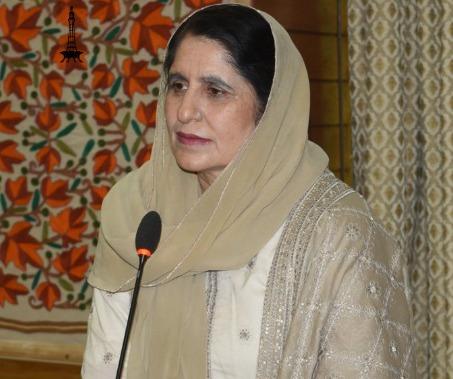
Hon. Advocate Nabeela Ayoub Khan serves as the Minister for Kashmir Cause, Arts & Languages, and Environmental Protection Agency (EPA), Azad Jammu & Kashmir
She is a Supreme Court advocate and former Vice Chairperson of the AJK Bar Council. With a strong background in law and public service, she has played an active role in advancing women’s representation, environmental governance, and cultural preservation in Azad Jammu & Kashmir. She is also associated with the Pakistan Peoples Party and has served multiple terms as a parliamentarian.
In an Exclusive Interview with Abdul Rafay Afzal, Editor-in-Chief of The Advocate Post, Hon. Adv. Nabeela Ayoub Khan discusses women’s leadership, environmental policy, cultural identity, and the Kashmir cause within a broader international and legal context.
Executive Summary
In this Exclusive Interview, Hon. Adv. Nabeela Ayoub Khan highlights the central role of women’s empowerment in sustainable development, emphasizing the need for greater representation in law, governance, and policymaking. Drawing on her legal background, she discusses key initiatives in environmental governance, cultural preservation, and language promotion in Azad Jammu & Kashmir. She also underscores the importance of international awareness and diplomatic engagement on the Kashmir cause, while advocating for stronger global cooperation in addressing environmental, social, and cultural challenges.
Q1: You have built a distinguished career as a Supreme Court advocate and former Vice Chairperson of the AJK Bar Council. How has your legal background influenced your approach to governance and public service?
Women constitute nearly 49% of our population, and no country can truly prosper without their empowerment. This belief guided my journey into the legal profession. In Azad Kashmir, despite women being strong and capable, they often lack representation in policy-making and decision-making structures.
My father, who was inspired by Mohtarma Benazir Bhutto, encouraged me to pursue law. From there, my journey evolved from legal practice to politics. I have been an ideological worker of the Pakistan Peoples Party, and over time, through dedication and perseverance, I was able to gain acceptance within society.
In our society, respect for women does come, but it comes with consistent hard work, resilience, and commitment.
Q2: As the world observes International Women’s Day and Women’s Month, how important is women’s representation in leadership roles like legal, legislation and others?
Women are natural managers. Even within households, they manage resources, finances, and responsibilities effectively. When given roles in society, women often perform exceptionally well because they understand social, cultural, and economic dynamics deeply.
If nearly half of the population is excluded from meaningful participation, a society cannot truly progress. Equal participation, equal power-sharing, and inclusion in policymaking are essential.
While legislation has been enacted to protect women, the real issue lies in lack of awareness and implementation. Islam itself empowers women, and laws exist but without awareness and enforcement, many women remain deprived of their rights.
Q3: Given your own journey in the legal field, what message or advice would you offer to young women aspiring to pursue careers in law, public service, and policymaking?
Women are highly capable often even more than men if given the right opportunities. However, support from family is critical. Without the support of a father, brother, or husband, many women struggle to reach their full potential.
I would also acknowledge and appreciate those men who support women’s progress, they play an essential role in societal development.
To women, I would say: work within your values, remain focused, and strive with determination. Society gradually accepts those who demonstrate consistency, capability, and discipline.
At the same time, I urge global audiences to remember the women of Kashmir women who continue to endure hardship, injustice, and violence, yet remain resilient. Their voices must also be heard at the international level.
Q4: Environmental protection is a global priority. What initiatives is the EPA in Azad Jammu & Kashmir undertaking?
Environmental protection goes beyond cleanliness—it is about building a sustainable and responsible society. It includes reducing pollution, managing waste, and addressing global challenges such as climate change.
We are working on multiple fronts, including:
- Reducing plastic usage
- Improving waste management and water sanitation
- Developing cleaner urban environments
With support from institutions such as the World Bank, projects are underway to improve environmental conditions.
We are also exploring policies where construction permits and housing approvals are aligned with environmentally sustainable standards. Only through comprehensive planning can we effectively address future environmental challenges such as climate change and greenhouse effects.
Q5: What steps are being taken to preserve culture and languages in Azad Jammu & Kashmir?
Cultural identity is deeply connected to language and heritage. Through institutions such as the Cultural Academy, we are publishing books and materials to preserve our traditions for future generations.
We are also organizing cultural programmes across regions such as Kotli and Rawalakot, promoting local languages like Pahari and Kashmiri. One of the key challenges is that younger generations are becoming disconnected from their linguistic and cultural roots.
To address this, we are working towards including cultural and linguistic content in educational curricula, so students can better understand their heritage.
Q6: Do you see opportunities for cultural exchanges and international collaboration to promote the heritage and artistic traditions of Azad Jammu & Kashmir globally?
Yes, there is significant potential for cultural diplomacy and international collaboration. I strongly believe that Kashmiri culture, traditions, and crafts should be promoted globally through structured initiatives.
For instance, cultural exhibitions and events can be organized through our embassies and international missions, where we can showcase Kashmiri dresses, shawls, handicrafts, and artistic heritage. Establishing cultural display centres and participating in international cultural forums can further enhance global awareness and appreciation of our identity.
Such efforts will not only preserve our cultural heritage but also strengthen international engagement and promote Azad Jammu & Kashmir’s rich traditions on a global platform and we are open for cooperation’s as well.
Q7: From a legal and policy perspective, how can the Kashmir issue be better understood internationally?
The Kashmir issue must be understood in light of the serious human rights realities on the ground. There have been many tragic incidents, such as Kunan Poshpora (1991), and more recently the developments following 5 August 2019, when the special status of Jammu & Kashmir was revoked, raising concerns about demographic changes and fundamental rights.
I believe Marka-e-Haq was good for Kashmir cause that it got international more international attention afterwards. The actual suffering of Kashmiris particularly women can only truly be understood by those living through it.
From a policy perspective, Pakistan has consistently raised the matter at international forums. However, I believe that we should also look into other approachs. There is a need to move towards a more practical and result-oriented framework, including bringing China on board as a key stakeholder as they also controls part of Kashmir (Aksai Chin). A trilateral approach could help move towards a more expedited and effective resolution.
Ultimately, stronger legal awareness, international engagement, and diplomatic efforts are essential to ensure that the voices of the Kashmiri people are heard globally.
Q8: Finally, during International Women’s Month, what message would you like to share with women and young girls of Kashmir, Pakistan, and around the world about leadership, resilience, and contributing to public life?
In terms of power-sharing, women are still not adequately represented in Azad Kashmir’s legislative system. You can clearly see that women do not have their due share in legislation.
Women need to continue their struggle and put in more effort to achieve better representation, stronger status, and greater acceptance in society.
Editor’s Insight:
Adv. Nabeela Ayoub Khan’s interview reflects a grounded yet assertive perspective shaped by law, governance, and lived realities. Her emphasis on women’s inclusion highlights a persistent structural gap in representation, while her views on environmental policy and cultural preservation demonstrate a policy-driven approach to sustainable development and identity protection. On the Kashmir issue, her position underscores the need to move beyond limited frameworks toward broader international engagement. Overall, her narrative presents a convergence of legal understanding, political experience, and advocacy, offering insight into both the challenges and evolving priorities within Azad Jammu & Kashmir.
Disclaimer:
The views and opinions expressed in this interview are those of the interviewee and do not necessarily reflect the editorial stance of The Advocate Post. This feature is intended for informational and journalistic purposes, providing a platform for perspectives on public policy, governance, and international issues. All efforts have been made to present the responses accurately and in context.
Abdul Rafay Afzal is the Editor in Chief of The Advocate Post, recognised as Pakistan’s youngest international journalist. He writes perceptive columns on geopolitics, international relations, and legal affairs etc. in more than 15 countries. Moreover he is a lawyer, global affairs & policy advisor, President (Youth) Civil Society Network Pakistan and Consutant (International Cooperation and Media Diplomacy) Lahore Press Club. He can be reached at @arafzal555 on Instagram or email abdulrafayafzal@theadvocatepost.org