
By Abdul Rafay Afzal (Editor in Chief – The Advocate Post)
Across the drylands of the Horn of Africa, the acacia tree is more than a feature of the landscape. It is shade for pastoralists, fodder for livestock, habitat for birds and wildlife, protection against wind erosion, and fuel for households that have few affordable energy alternatives. In parts of Somaliland, Somalia and eastern Ethiopia, acacia, commiphora, frankincense and dry forest ecosystems form the ecological architecture of life in arid and semi-arid regions.
Yet these landscapes are disappearing quietly.
The Horn of Africa is often discussed through the language of conflict, drought, displacement and food insecurity. These are real and urgent challenges. But beneath them lies another crisis that receives far less international attention: the erosion of biodiversity and dryland ecosystems. Trees are cut, rangelands are degraded, soil is exposed, wildlife habitats shrink, and communities become increasingly vulnerable to climate shocks.
Charcoal sits at the centre of this crisis. For millions of households, charcoal is not a luxury. It is a basic energy source. It heats food, supports urban markets, creates income for traders and producers, and fills the gap left by energy poverty. But it has also become one of the region’s most destructive environmental pressures. When charcoal production is unregulated, it converts slow-growing dryland trees into short-term fuel and leaves behind degraded land that may take decades to recover.
The question, therefore, is not whether charcoal should simply be condemned. Such an approach would be unrealistic and unfair to communities that depend on it. The real question is more difficult: can public policy protect biodiversity while supporting livelihoods?
In Somaliland, Somalia and Ethiopia, the answer will depend on whether governments and regional institutions can move beyond crisis response and build environmental governance systems capable of regulating natural resources, financing alternatives, empowering communities, and restoring degraded ecosystems. Saving the drylands of the Horn is not only an environmental issue. It is an energy challenge, a livelihood challenge, a governance challenge and a development challenge.
I. Why These Drylands Matter
The drylands of Somaliland, Somalia and Ethiopia are often misunderstood as empty or marginal spaces. In reality, they are complex ecological systems that sustain millions of people and contain significant biodiversity.
Acacia and commiphora ecosystems dominate many of these landscapes. These are not dense tropical forests, but they are still forests in ecological and livelihood terms. Their trees and shrubs are adapted to long dry seasons, poor soils, irregular rainfall and high temperatures. They stabilise soil, slow water runoff, provide grazing resources, and support insects, birds, reptiles, mammals and pastoral economies.
Frankincense landscapes are another important part of this ecological story. Boswellia species, which produce frankincense resin, grow in rocky and dry environments across parts of the Horn. These trees are economically valuable, culturally significant and ecologically fragile. They support local livelihoods through resin harvesting, but they are also vulnerable to overharvesting, poor regeneration, land degradation, conflict and climate stress.
Rangelands are equally central. Pastoral communities across the Horn depend on seasonal movement between grazing areas and water sources. This mobility is not backward or inefficient; it is an adaptive system developed over generations to survive in dry environments. When rangelands are healthy, they support livestock, conserve vegetation, maintain soil structure and help communities withstand drought. When rangelands are degraded, the entire rural economy becomes weaker.
Dry forests and rangelands also perform important climate functions. They store carbon in woody biomass and soils, reduce erosion, help recharge groundwater, and buffer communities from climate extremes. In a region repeatedly affected by drought and flash floods, these ecosystem services are not abstract. They directly affect food security, water security and public safety.
The biodiversity of these drylands includes gazelles, antelopes, birds of prey, reptiles, small mammals, pollinators and drought-resistant plant species. Some species are threatened by habitat loss, hunting, illegal trade and fragmentation. Others are poorly studied, meaning that biodiversity may be disappearing before it has even been properly documented.
The protection of these ecosystems is therefore not a romantic conservation agenda. It is a public policy necessity. Dryland biodiversity supports agriculture, pastoralism, energy systems, rural income, water management, climate resilience and local identity. If these ecosystems collapse, the consequences will extend far beyond wildlife.
II. Understanding the Charcoal Economy
Charcoal is one of the most politically sensitive environmental issues in the Horn of Africa because it sits at the intersection of poverty, energy, trade, conflict and governance.
Urbanisation has increased demand for household fuel. In many towns and cities, electricity remains expensive, unreliable or unavailable for cooking. Liquefied petroleum gas, solar cooking technologies and electric cooking alternatives may exist, but they are often unaffordable for low-income households. As a result, charcoal remains the practical option for many families.
For rural producers, charcoal can provide income during periods of drought, livestock loss or economic hardship. In fragile economies where formal jobs are scarce, cutting and selling wood for charcoal may become a survival strategy. Traders, transporters, retailers and market intermediaries also benefit from the charcoal chain. This creates a large informal economy that cannot be dismantled by law enforcement alone.
Exports have historically intensified the problem in Somalia. Charcoal has been linked to illicit trade networks and conflict economies, particularly where weak state control allows armed groups, local power brokers or informal authorities to tax production and movement. In such contexts, charcoal is no longer merely a household fuel. It becomes a political economy of environmental destruction.
But it would be a mistake to blame local communities alone. The drivers are structural: energy poverty, weak regulation, limited livelihood alternatives, insecurity, market demand, lack of affordable cooking technologies, and poor enforcement of environmental laws. A family that uses charcoal because it cannot afford gas is not the same as a commercial network that clears dry forests for profit.
This distinction matters for public policy. If governments treat charcoal purely as a criminal issue, they may punish the poorest users while failing to address the commercial and institutional drivers of deforestation. If they treat it purely as a poverty issue, they may ignore the ecological damage. A balanced policy must regulate production, restrict destructive commercial exploitation, expand affordable energy alternatives, and support communities that depend on forest resources.
The goal should not be a sudden unrealistic ban that harms households. The goal should be a managed transition: less dependence on destructive charcoal, more efficient cooking, alternative fuels, sustainable woodlots, community-managed forests, and stronger enforcement against large-scale illegal trade.
III. Biodiversity Under Pressure
Dryland ecosystems are resilient, but they are not indestructible. Their resilience depends on balance: enough vegetation to hold soil, enough rainfall to regenerate plants, enough mobility for pastoral systems, and enough governance to prevent overuse. In many parts of the Horn, that balance is breaking.
Tree loss is the most visible sign. When mature acacia and other dryland trees are cut for charcoal, the immediate result is loss of canopy cover. But the deeper damage occurs over time. Without trees, soil becomes exposed to wind and water erosion. Seed sources decline. Wildlife loses shelter and food. Livestock lose shade and browse. Water runoff increases. The land becomes hotter, drier and less productive.
Habitat fragmentation follows. Roads, settlements, farms, charcoal extraction zones and conflict-related displacement can break ecosystems into smaller, isolated patches. Wildlife corridors disappear. Pastoral routes become restricted. Communities compete over fewer resources.
Soil degradation is another serious consequence. Dryland soils are often thin and vulnerable. Once vegetation is removed, erosion can quickly reduce fertility. Degraded soil absorbs less water, which worsens drought impacts and increases flash flood risks during heavy rains. The result is a destructive cycle: less vegetation, poorer soil, weaker water retention, lower productivity, and deeper poverty.
Climate change intensifies these pressures. The Horn of Africa has faced repeated droughts, irregular rainfall, heat stress and humanitarian emergencies. Climate shocks weaken ecosystems already damaged by overharvesting and poor land management. A healthy dryland can recover from drought; a degraded one may shift toward desertification.
Wildlife habitat loss is also significant. As forests and rangelands shrink, species that depend on these habitats decline. Some are hunted. Others lose breeding grounds or migration routes. Because biodiversity monitoring is limited in many parts of the region, the full scale of wildlife decline may be underestimated.
This is why conservation cannot be separated from governance. Tree planting alone will not restore drylands if charcoal markets remain uncontrolled, grazing systems are mismanaged, alternative energy remains unaffordable, and local communities are excluded from decision-making. Dryland restoration must be ecological, economic and institutional at the same time.
IV. Somaliland: A Different Governance Model?
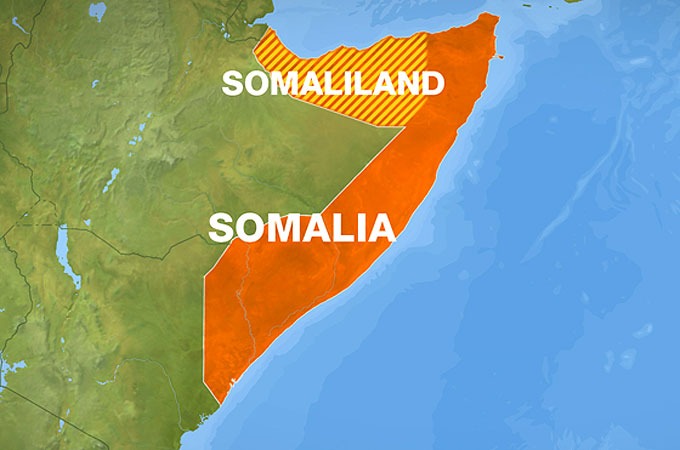
Somaliland offers an important case study because it has developed functioning local institutions despite limited international recognition. Its environmental governance is still constrained by finance, capacity and enforcement challenges, but its policy direction shows a clearer attempt to link biodiversity, rangelands, charcoal reduction and community-based conservation.
The Ministry of Environment and Climate Change has identified priorities that are directly relevant to the dryland crisis. These include biodiversity management, reducing charcoal production through alternative energy, watershed management, rangeland rehabilitation, ecological improvement, climate change adaptation, marine and coastal environmental management, and institutional capacity development.
This is significant because it frames environmental protection not merely as wildlife preservation but as a development issue. Rangeland rehabilitation affects pastoral livelihoods. Watershed management affects water security. Alternative energy affects household welfare and forest protection. Biodiversity management affects long-term ecological resilience.
The ministry’s stated functions also include drafting environmental policy and legislation, developing implementation strategies, managing forest wardens and guards, promoting community-based rangeland and forestry conservation, identifying and mapping protected areas, maintaining protected species lists, and implementing wildlife protection programmes. These functions matter because dryland conservation depends on everyday enforcement, not only national slogans.
Forest guards and wardens are especially important in regions where illegal tree cutting and wildlife poaching can occur far from central authorities. However, enforcement must be designed carefully. If guards only punish poor households while large traders escape accountability, the policy will fail. Enforcement should target commercial destruction while working with communities on legal, sustainable alternatives.
Community forestry is another promising area. Local communities often understand grazing cycles, water points, tree species and seasonal pressures better than distant bureaucracies. If they are given rights, training and incentives, they can become conservation partners. If they are excluded, conservation may be seen as external control over local resources.
Alternative energy is perhaps the most urgent policy lever. Somaliland cannot reduce charcoal dependence without affordable substitutes. Solar energy, LPG access, improved cookstoves, electric cooking where grids allow, and community woodlots can all form part of a transition strategy. The policy challenge is affordability. If alternative fuels are too expensive, charcoal will remain dominant regardless of environmental awareness campaigns.
Reforestation and rangeland rehabilitation must also use appropriate native species. Dryland restoration cannot simply copy models from wetter countries. Planting must consider rainfall, soil, grazing pressure, community use and survival rates. In these ecosystems, protecting natural regeneration may sometimes be more effective than mass planting.
Somaliland’s approach is not perfect, and implementation capacity remains a serious issue. But its institutional framework creates a foundation for a more coherent environmental governance model: one that treats charcoal, biodiversity, rangelands, water and livelihoods as connected policy areas. (All of these observations are attained during my visits to Somaliland/Somalia last year and number of discussions with their key officials)
V. Somalia: Rebuilding Environmental Governance
Somalia’s environmental crisis is shaped by decades of conflict, state fragility, displacement and weak enforcement. Charcoal production and export became deeply embedded in political and conflict economies after the collapse of central authority. Dry forests suffered as regulation weakened and commercial networks expanded.
Yet Somalia is now attempting to rebuild environmental governance. The Ministry of Environment and Climate Change has published a National Environmental Policy and Environmental and Social Impact Assessment and Audit Regulations. It also lists a National Forestry Policy and a National Charcoal Policy as under development.
These are important steps. A National Environmental Policy can provide the strategic framework for conservation, climate adaptation, pollution control, land management and institutional coordination. Environmental impact assessment regulations can help ensure that infrastructure, energy, ports, roads and urban expansion projects consider ecological and social consequences before implementation. Forestry and charcoal policies can directly address tree loss, fuelwood demand, sustainable forest management and illegal trade.
The challenge is implementation. Somalia’s federal structure, security situation and uneven administrative capacity make environmental enforcement difficult. In some areas, ministries may have limited reach. In others, local administrations, clan authorities, private actors or armed groups may exert more practical control over natural resources than formal institutions.
This does not mean policy is irrelevant. It means policy must be realistic. Somalia’s environmental governance must combine national frameworks with local enforcement partnerships, community-based conservation, livelihood support, and international technical assistance.
International support can help, but it must avoid creating paper policies that are not implemented. Donor-funded environmental programmes should invest in field-level capacity: rangers, monitoring systems, community forestry, restoration pilots, data collection, environmental courts or tribunals, and practical energy alternatives.
A National Charcoal Policy, in particular, will need to address both supply and demand. On the supply side, it must regulate cutting, transport, licensing and enforcement. On the demand side, it must promote affordable alternatives for urban households. Without demand reduction, supply restrictions alone may push the trade underground.
Somalia’s environmental future will depend on whether rebuilding institutions can gradually reclaim control over natural resource governance. Charcoal is not only an environmental commodity; it is a test of state capacity.
VI. Ethiopia: Restoration at Scale
Ethiopia presents a different model. Unlike Somalia, Ethiopia has a stronger central state and has invested heavily in large-scale restoration, forestry and land rehabilitation. Its Green Legacy Initiative, launched in 2019, has become one of Africa’s most visible tree-planting and environmental restoration programmes.
The initiative aims to combat deforestation, soil erosion, land degradation and climate change while expanding forest cover and improving ecosystem resilience. It has mobilised citizens across the country and placed restoration at the centre of national development messaging.
Ethiopia has also been associated with forest landscape restoration commitments, including efforts linked to restoring degraded landscapes through participatory forest management, area enclosures, sustainable land management and tree planting. In dryland regions, especially in eastern and southern Ethiopia, restoration is closely connected to pastoral livelihoods, soil conservation, watershed management and drought resilience.
The Ethiopian Biodiversity Institute identifies Acacia-Commiphora woodlands as important ecosystems found in several regions, including Somali, Afar, Oromia and other lowland areas. These ecosystems support drought-tolerant trees and shrubs, wildlife such as gazelles and antelopes, grazing systems, fuelwood, charcoal, frankincense, myrrh and other economically valuable products.
Ethiopia’s strength lies in scale and state capacity. It can mobilise millions of citizens, direct public institutions, attract international climate finance, and integrate restoration into national planning. But scale also brings risks. Tree planting campaigns must be judged not only by the number of seedlings planted, but by survival rates, ecological suitability, native species selection, long-term maintenance and community benefits.
In drylands, planting the wrong species in the wrong place can waste resources or even harm ecosystems. Restoration must be site-specific. Some degraded areas may need assisted natural regeneration. Others may require grazing management, soil and water conservation, invasive species control, or protection of existing vegetation rather than new planting.
Ethiopia’s experience offers lessons for Somaliland and Somalia: restoration requires political visibility, financing, technical systems and public mobilisation. But it also shows that environmental success must be measured by ecological outcomes, not only campaign figures.
VII. Governance vs Conservation
The central lesson from the Horn of Africa is clear: biodiversity cannot survive without institutions.
Conservation is often imagined as the protection of animals, forests or scenic landscapes. But in practice, conservation depends on ministries, laws, budgets, courts, local governments, community agreements, scientific data, energy markets and enforcement agencies. Where governance is weak, ecosystems are vulnerable. Where governance is coherent, even degraded landscapes can recover.
Law enforcement is necessary, but it is not sufficient. Forest guards, wildlife officers and environmental inspectors need legal authority, training, equipment, salaries and protection from political interference. They also need public legitimacy. Communities are more likely to cooperate with enforcement when they believe rules are fair and when they benefit from conservation.
Alternative livelihoods are equally important. A charcoal producer cannot be expected to abandon income without another option. Restoration programmes should create green jobs in nursery management, rangeland rehabilitation, watershed restoration, eco-tourism, monitoring, sustainable resin harvesting and renewable energy distribution.
Renewable energy is perhaps the most powerful conservation intervention in the region. If households can access affordable alternatives to charcoal, pressure on dry forests will decline. This requires energy policy, not only environmental policy. Ministries of energy, finance, trade and environment must work together.
Cross-border cooperation is also essential. Ecosystems do not stop at political borders. Pastoral routes, wildlife movement, trade networks and charcoal markets often cross boundaries between Somaliland, Somalia, Ethiopia, Djibouti and Kenya. A purely national approach cannot fully address regional environmental pressures.
IGAD can play a stronger role here. The organisation already recognises the importance of arid and semi-arid lands, pastoral livelihoods, drought resilience and regional environmental cooperation. A Horn of Africa dryland conservation compact could support joint monitoring, shared research, cross-border enforcement, restoration finance and harmonised charcoal policies.
Natural resource governance should also be integrated into peacebuilding. In fragile areas, competition over land, water, grazing and forest products can feed local conflict. Environmental degradation can therefore become a security risk. Conversely, cooperative resource management can support stability.
The choice is not between conservation and development. The real choice is between planned development that protects natural capital and unmanaged extraction that destroys the ecological base of future prosperity.
VIII. The Economics of Conservation
One reason dryland ecosystems are neglected is that their economic value is underestimated. A standing tree rarely appears in national accounts. A charcoal sack has a market price; soil stability, shade, biodiversity and water retention often do not. This creates a distorted economy in which destruction is monetised and conservation is invisible.
Natural capital accounting can help correct this. Governments should measure the economic contribution of forests, rangelands, watersheds and biodiversity to livelihoods, agriculture, livestock, disaster risk reduction and climate resilience. Once these values are recognised, conservation becomes an investment rather than a cost.
Eco-tourism also has potential, particularly in Somaliland and Ethiopia, where landscapes, wildlife, culture and heritage could attract niche tourism if security, infrastructure and conservation standards improve. Tourism cannot replace pastoralism or agriculture, but it can diversify local economies and create incentives to protect wildlife and landscapes.
Carbon finance is another opportunity. Dryland restoration, avoided deforestation and improved rangeland management can generate climate benefits. However, carbon projects must be designed carefully to avoid land grabbing or exclusion of pastoral communities. Communities should receive fair benefits and retain access to essential resources.
Green jobs can be created through nurseries, seed collection, restoration labour, renewable energy distribution, sustainable forestry, ecological monitoring, environmental education and eco-enterprises. Youth and women should be central to these programmes.
Sustainable charcoal alternatives should include improved cookstoves, LPG expansion, solar cooking where viable, electric cooking in urban areas, biomass briquettes from agricultural waste, and regulated woodlots. No single solution will work everywhere. A practical strategy will combine multiple technologies based on local affordability and availability.
Payment for ecosystem services could also be tested. Communities that protect watersheds, restore rangelands or conserve wildlife habitats could receive financial incentives from government, donors, climate funds or private actors. This would recognise the public value of local stewardship.
The economics of conservation must be honest: people protect nature when protection also protects their future. Environmental policy will fail if it asks poor communities to carry the cost of conservation while others benefit.
IX. Regional Solutions
The dryland crisis of the Horn of Africa requires regional solutions because the drivers are regional.
Shared ecosystems stretch across Somaliland, Somalia and Ethiopia. The Somali Acacia-Commiphora bushlands, semi-desert scrublands, frankincense landscapes, rangelands and pastoral corridors are part of a wider ecological zone. Fragmented national policies cannot fully manage such interconnected systems.
Joint monitoring should be a priority. Satellite imagery, drones, field surveys, community reporting and university research can help track tree cover loss, rangeland condition, wildlife movement, charcoal production zones and restoration success. A regional dryland observatory could provide evidence for policymaking.
Shared wildlife corridors should also be identified. Even where wildlife populations are reduced, protecting movement routes can support long-term recovery. Conservation planning should include pastoral mobility, because livestock routes and wildlife corridors often overlap.
Research cooperation is essential. Universities in Hargeisa, Mogadishu, Addis Ababa, Jigjiga and other regional centres could collaborate on dryland ecology, charcoal economics, frankincense sustainability, climate adaptation and biodiversity monitoring. Local researchers should lead this work because they understand the social and ecological realities of the region.
Cross-border enforcement is necessary to address illegal charcoal trade and wildlife trafficking. If one jurisdiction restricts cutting while another allows trade, destructive networks will simply shift routes. Harmonised policies and information sharing can reduce this problem.
Regional financing mechanisms should be explored. IGAD, the African Union, UN agencies, development banks and climate funds could support a Horn of Africa Dryland Restoration and Alternative Energy Facility. Such a facility could finance community forestry, rangeland rehabilitation, energy transition, protected areas and biodiversity monitoring.
The region also needs a stronger public narrative. Drylands should not be described as wastelands waiting to be exploited. They are living ecosystems. They are productive landscapes. They are cultural homelands. They are climate buffers. Public policy must begin by recognising their value.
Conclusion
The future of Somaliland, Somalia and Ethiopia’s dryland ecosystems will not be decided by ecology alone. It will be decided by governance.
The acacia tree cut for charcoal tells a larger story. It is a story of household energy poverty, rural hardship, weak enforcement, urban demand, conflict economies, climate stress and underfunded environmental institutions. But it can also become a story of reform: alternative energy, community forestry, dryland restoration, youth employment, biodiversity protection and regional cooperation.
Saving the Horn’s biodiversity is not simply about protecting trees or wildlife. It is about protecting pastoral livelihoods, water security, soil fertility, food systems, local economies and resilience against climate change. It is about recognising that environmental degradation is not separate from poverty, conflict or development. It is woven into all of them.
Somaliland’s emerging environmental governance priorities, Somalia’s policy rebuilding, and Ethiopia’s large-scale restoration efforts each offer part of the answer. None is sufficient alone. Somaliland shows the importance of local institutional focus. Somalia shows the urgency of rebuilding environmental law and enforcement after conflict. Ethiopia shows what scale and political mobilisation can achieve when restoration becomes a national priority.
The next step is to connect these efforts regionally and make them practical for communities. Public policy must reduce destructive charcoal dependence without punishing the poor. It must protect biodiversity without excluding pastoralists. It must finance restoration without turning land into a commodity detached from local rights. It must treat drylands not as empty spaces, but as living systems at the heart of the Horn’s future.
Ultimately, the question is not whether the drylands can survive. They have survived droughts, heat, scarcity and change for centuries. The real question is whether political institutions can act with enough seriousness to protect them now.
Saving the Horn’s biodiversity is an environmental challenge. It is an energy challenge. It is an economic challenge. It is a development challenge. And above all, it is a question of political will.
Abdul Rafay Afzal is the Editor in Chief of The Advocate Post, recognised as Pakistan’s youngest international journalist. He writes perceptive columns on geopolitics, international relations, and legal affairs etc. in more than 15 countries. Moreover he is a lawyer, global affairs & policy advisor, President (Youth) Civil Society Network Pakistan and Consutant (International Cooperation and Media Diplomacy) Lahore Press Club. He can be reached at @arafzal555 on instagram or email abdulrafayafzal@theadvocatepost.org