By Syeda Ayesha Ghaffar (Pakistan)
Urdu literature has never belonged comfortably to a single geography. It was born from movement, encounter and exchange: in bazaars, royal courts, Sufi gatherings and ordinary streets where Persian, Arabic, Turkish and the local languages of the subcontinent met one another. Long before it became widely known as Urdu, it was called Hindavi, Dehlavi, Dakhini and Rekhta a language mixed not because it lacked purity, but because it carried many worlds within it.
That history matters today. In both India and Pakistan, Urdu is too often discussed as if it were the exclusive cultural property of one state, one religion or one political inheritance. Such claims diminish it. Urdu is the national language of Pakistan, but it is also constitutionally recognised in India and remains deeply rooted in Delhi, Lucknow, Hyderabad, Aligarh and other centres of literary life. Its script may distinguish it from Hindi, but its speech, idiom and emotional universe continue to cross the border with remarkable ease.
The great achievement of Urdu adab was not merely its elegance. It created a public vocabulary for love, loss, rebellion, exile, faith and social criticism.
Mir gave loneliness a language. Ghalib transformed uncertainty into philosophy. Iqbal joined poetry to civilisational reflection. Faiz made resistance lyrical without making it crude. Manto exposed the brutality of Partition without offering patriotic comfort to either side. Ismat Chughtai challenged social respectability and gave women’s interior lives a fearless place in fiction. Qurratulain Hyder stretched the Urdu novel across centuries, migrations and fractured identities.
These writers cannot be contained by modern borders. Manto belongs to Bombay as much as Lahore. Faiz was read in Delhi, Dhaka, Moscow and Beirut. Ghalib’s Delhi speaks to readers in Karachi and London. Intizar Husain’s stories carry memories of towns left behind, while Gulzar’s words demonstrate how naturally Urdu continues to live within Indian cinema and popular culture, even when it is labelled simply as Hindi.
Partition created two nation-states, but it did not create two emotional languages.
A ghazal sung in Lahore may be understood instantly in Lucknow. A mushaira in Delhi can find an enthusiastic audience in Karachi. Television dramas, films, songs, literary festivals and social media have preserved a shared vocabulary that official politics repeatedly tries to narrow.
Urdu has often succeeded where diplomacy has failed. A poem can cross a border more easily than a person. A verse of Faiz or Ghalib can create a moment of recognition between people whose governments may otherwise speak only through accusation and suspicion.
Yet Urdu adab now faces a different kind of border: the digital one.
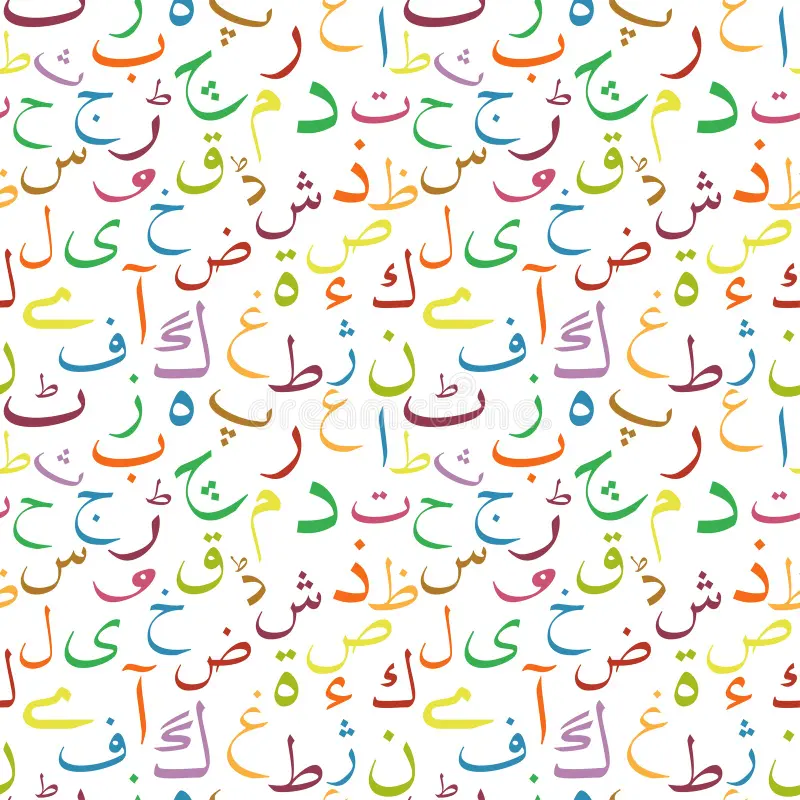
The beauty of Nastaliq, with its descending lines and fluid connections, has also made Urdu technically difficult to typeset, search and process. For years, many younger users turned to Roman Urdu because standard keyboards and digital platforms did not serve the original script adequately. Researchers continue to describe Urdu as a low-resource language in computing despite its enormous global readership. New fonts, keyboards, searchable archives and specialised language models are improving the situation, but technological neglect remains a serious cultural risk.
This is where the contemporary Rekhta project acquires symbolic importance. By digitising poetry, prose, dictionaries, manuscripts and recordings, it has returned an old name of Urdu to the digital age.
Its contribution is not limited to preservation. It has widened access. A reader who cannot read Nastaliq fluently can encounter the same poem in Devanagari or Roman transliteration, listen to its recitation and explore the meanings of difficult words. Rekhta Foundation now operates an extensive digital ecosystem of archives, libraries, dictionaries, learning platforms and cultural programmes intended to keep Urdu and other literary traditions accessible.
It reminds us that a language survives when people are invited into it, not when they are tested at its gate.
The decline of reading culture is therefore more dangerous than any dispute over ownership. Urdu is frequently celebrated in speeches while being neglected in classrooms, libraries and homes. Its poetry is quoted at public functions, but its prose traditions, literary criticism, translations and contemporary fiction receive far less attention.
Nostalgia cannot replace readership.
There is also a need to expand our understanding of what Urdu literature now represents. Urdu writing is no longer produced only in Lahore, Karachi, Delhi, Lucknow or Hyderabad. It is being written by diaspora communities in Britain, North America, the Gulf, Europe and elsewhere. Across borders, Urdu needs a new literary compact. Pakistani and Indian publishers should cooperate in lawful editions, translations and distribution. Literary institutions should build shared digital catalogues.
Digital platforms should promote not only famous couplets but also essays, short stories, criticism, novels and emerging writers. Schools should teach Urdu as a living language of imagination rather than a rigid exercise in grammar. Literary festivals should become spaces for serious intellectual engagement rather than celebrity appearances alone.
Urdu adab has survived empires, Partition, censorship, ideological appropriation and technological delay. It survived because it never remained confined to rulers, governments or institutions. It travelled through memory, music and conversation.
From Rekhta to the present, Urdu’s deepest strength has been its refusal to remain within a single boundary.
The future of Urdu will not be secured by claiming it more aggressively. It will be secured by reading it more widely, teaching it more intelligently and allowing it, once again, to belong to everyone.
Author is Member Editorial Board of The Advocate Post