By Abdul Rafay Afzal (Editor in Chief – The Advocate Post)
Punjab’s Healthcare Revolution: Turning Vision into Global Excellence
Exclusive Interview of Hon. Khuwaja Imran Nazir, Minister of Health and Population Development Punjab, Islamic Republic of Pakistan
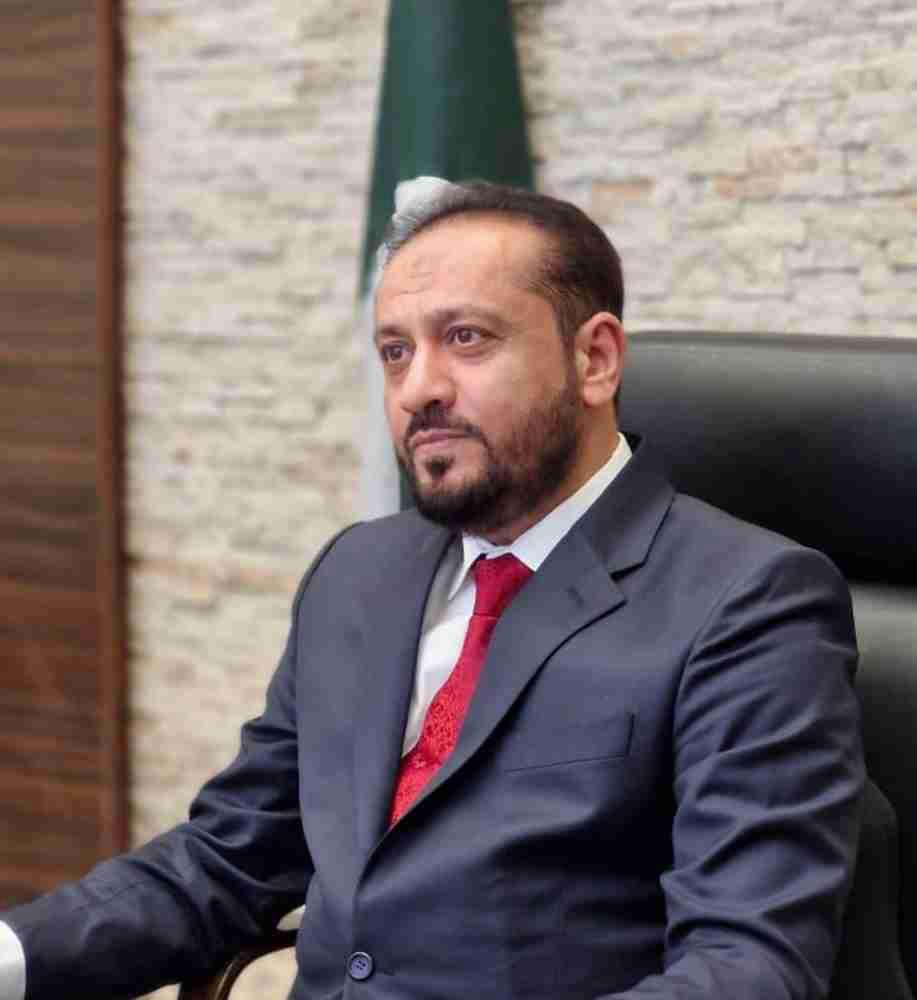
Hon. Khuwaja Imran Nazir serves as the Provincial Minister for Health and Population Welfare in Punjab, Pakistan’s most populous and economically significant province. With a political career rooted in grassroots leadership, Minister Nazir has consistently prioritized public service and citizen-centric policy-making. Under his leadership, Punjab has embarked on a comprehensive healthcare reform agenda aimed at improving access, quality, and innovation across all levels of the health system. The Government of Punjab, led by Chief Minister Maryam Nawaz Sharif, is implementing sweeping reforms across the province’s health sector.
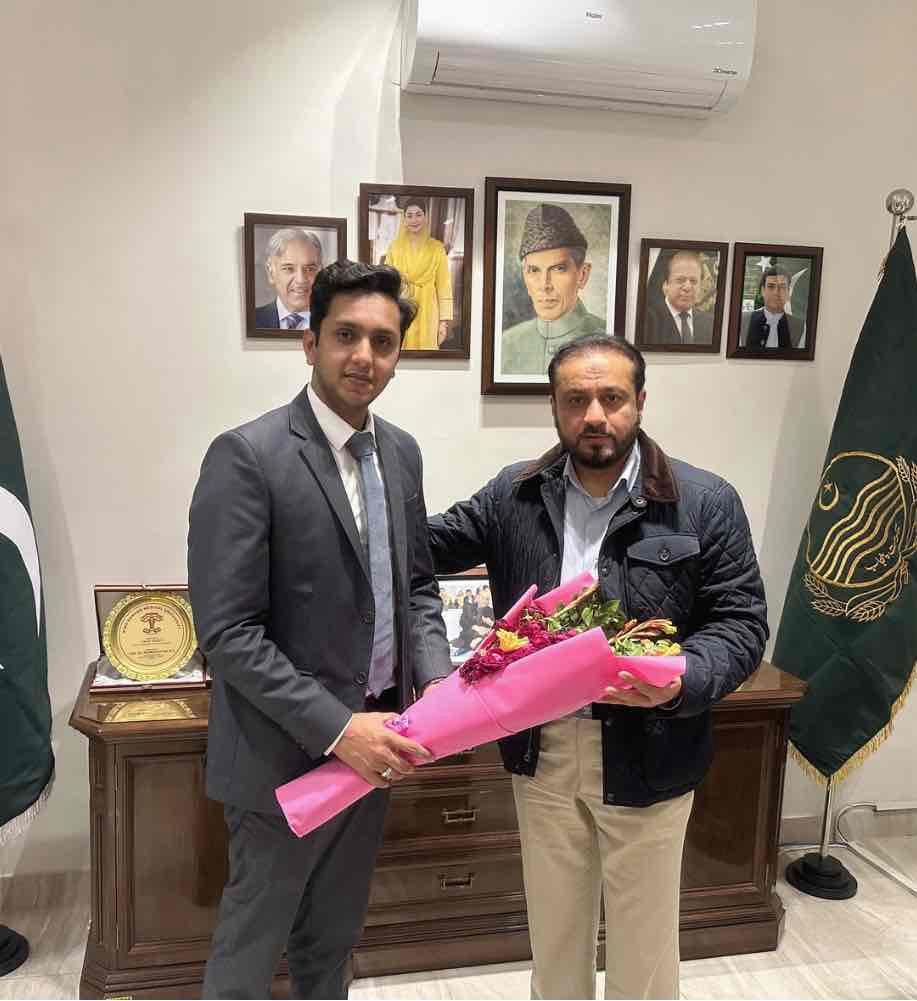
In an exclusive sitting with Abdul Rafay Afzal, Editor-in-Chief of The Advocate Post, Hon. Khuwaja Imran Nazir shares Punjab’s ambitious healthcare reforms, global partnerships, and strategies to transform healthcare access while positioning the province as a regional medical hub.
Executive Summary
In an Exclusive Interview by Abdul Rafay Afzal for The Advocate Post with Hon. Khuwaja Imran Nazir, Minister of Health and Population Welfare Punjab, outlined the province’s transformative healthcare agenda under Chief Minister Maryam Nawaz Sharif. Highlighting ambitious reforms across primary, secondary, and specialized care, Minister Nazir detailed initiatives such as the Lahore Medical City, Nawaz Sharif Institutes for Cancer and Cardiology, and the deployment of 20,000 Community Health Inspectors to bring quality care to citizens’ doorsteps. Emphasizing accountability, digital monitoring, telemedicine, and global partnerships with institutions like WHO, UNICEF, GAVI, and the Gates Foundation, he presented a comprehensive vision for Punjab as a regional hub for medical excellence, population welfare, and health innovation positioning the province to achieve its Vision 2030 goals while fostering economic resilience and human development.
Q1: Health tourism has positioned cities like Hyderabad and Chennai as global medical hubs. What is Punjab’s strategy to compete in this space, and how do you envision cities like Lahore emerging as credible destinations for international patients?
Khuwaja: Punjab is completely reshaping its healthcare ecosystem to establish cities like Lahore as international medical hubs. Our strategy under the Chief Minister’s health reform agenda is to build centres of excellence that offer world-class primary and specialized care at a fraction of global costs, supported by rapid emergency transport.
We are building high-end specialist hospitals to serve as regional anchors for medical tourism. Lahore Medical City will feature state-of-the-art hospitals, research centers, and specialized care modeled after global cities such as Doha. Our competitive advantage is providing quality care free of cost, offering high-end oncology and cardiac procedures without compromising outcomes. The Nawaz Sharif Institute of Cancer and Research in Lahore and the Nawaz Sharif Institute of Cardiology in Sargodha will set new benchmarks for specialized care in the region.
Q2: Punjab operates one of the largest healthcare delivery systems in the region. What structural reforms and investments are underway to ensure quality, affordability, and international standards particularly compared to regional competitors like India?
Khuwaja: We are upgrading more than 2,500 primary health facilities, but infrastructure alone is insufficient. Accountability is key. Our Independent Monitoring Unit audits performance in real-time. Digital dashboards tell us instantly if a doctor is absent or a pharmacy is out of stock. This proactive system ensures international standards are met daily.
He highlighted outsourcing and technology as critical components: Private doctors manage many primary health facilities to strengthen service delivery. Initiatives like Clinic on Wheels and Community Health Inspectors provide care at citizens’ doorsteps. Electronic Medical Registries track patient interactions over time, and telemedicine extends access to those in remote areas.
Q3: Your political journey from grassroots leadership to a key provincial ministry is often cited as a strength. How has this shaped your approach to healthcare reform?
Khuwaja: My public service began on Lahore’s streets, listening to citizens’ struggles firsthand. This experience shapes every reform we implement. Policy priorities shift from abstract statistics to human realities when you’ve seen families struggle for basic care.
He continued, Guided by Chief Minister Maryam Nawaz Sharif, we are implementing programs like the ‘Maryam Nawaz Health Clinics’, Clinic on Wheels, and Community Health Inspector initiatives. We are building a system where the common man is central to policy decisions. True reform happens when policymakers’ hearts beat in sync with the people.
Q4: International partnerships are now critical for modern healthcare systems. What collaborations is Punjab pursuing, and where do you see the greatest opportunities for impact?
Khuwaja: Punjab is moving from donor dependency to strategic technical partnerships. We align our partnerships under three pillars: strengthening health systems, building workforce capacity, and tech-driven innovation. Programs with the World Bank, UNICEF, GAVI, and WHO strengthen infrastructure, workforce skills, and routine immunization. The Gates Foundation helps scale innovative solutions like AI-driven diagnostics and telemedicine.
He stressed, Tech-driven innovation offers the greatest opportunity, scaling solutions to deliver world-class care directly to communities.
Q5: Population growth remains a pressing challenge. What initiatives are you introducing to promote responsible population management?
Khuwaja: Family planning is a top priority. Nearly 40% of maternal deaths are linked to poor birth spacing. High-quality family planning services are now available free of cost across all public health facilities. We’ve introduced implants, emergency contraceptives, and comprehensive counseling. Over 8,100 lady health visitors were trained last year, and more are being trained this year.
He added, Postpartum family planning is a critical opportunity, with 1.4 million births happening annually in public facilities. At the community level, door-to-door outreach and counseling are being scaled to reach millions. We work with community and religious leaders to communicate that family planning is responsible, safe, and aligned with cultural norms.
Q6: Looking toward Vision 2030, what flagship health and population initiatives will define Punjab’s transformation?
Khuwaja: Our Vision 2030 aims to turn Punjab’s population into a demographic dividend. Deploying 20,000 Community Health Inspectors, decentralizing critical care, and establishing Cath Labs in secondary hospitals ensures lifesaving care is available locally. By improving health, we secure the economic workforce of tomorrow and build human capital for a productive economy.
Q7: If you were addressing global policymakers and health investors today, what message would you give them about Punjab’s healthcare potential?
Khuwaja: Punjab is building a self-reliant, sustainable system through three pillars: Strengthening Facilities, Reaching the Community, and Pioneering Innovations. Over 2,500 Basic Health Units have been modernized into Maryam Nawaz Health Clinics. We have deployed 20,000 Community Health Inspectors and nearly 1,000 Clinics on Wheels. AI-powered diagnostics and province-wide telemedicine ensure equitable care across the province.
He concluded, By taking full ownership of reforms, Punjab proves that quality healthcare is achievable and scalable. We are creating a high-tech, proactive blueprint for universal health coverage and innovation.
Editor’s Insight:
Punjab’s healthcare reforms reflect a rare combination of ambitious vision and pragmatic execution. By integrating advanced technology, global partnerships, and community-focused initiatives, the province is not just expanding access to care but redefining the standard of public health in South Asia. Minister Khuwaja Imran Nazir’s approach demonstrates how policy rooted in ground-level experience can drive measurable impact, from specialized tertiary care to doorstep healthcare delivery, positioning Punjab as a potential regional leader in health innovation and population welfare.
Disclaimer:
The views and opinions expressed in this interview are those of Hon. Khuwaja Imran Nazir and do not necessarily reflect the official policy or position of The Advocate Post. The content is provided for informational purposes only and aims to present the minister’s perspective on Punjab’s healthcare initiatives.
Abdul Rafay Afzal is the Editor in Chief of The Advocate Post, recognised as Pakistan’s youngest international journalist. He writes perceptive columns on geopolitics, international relations, and legal affairs etc. in more than 15 countries. Moreover he is a lawyer, global affairs & policy advisor, President (Youth) Civil Society Network Pakistan and Consutant (International Cooperation and Media Diplomacy) Lahore Press Club. He can be reached at @arafzal555 on instagram or email abdulrafayafzal@theadvocatepost.org