By Abdul Rafay Afzal (Editor in Chief – The Advocate Post)
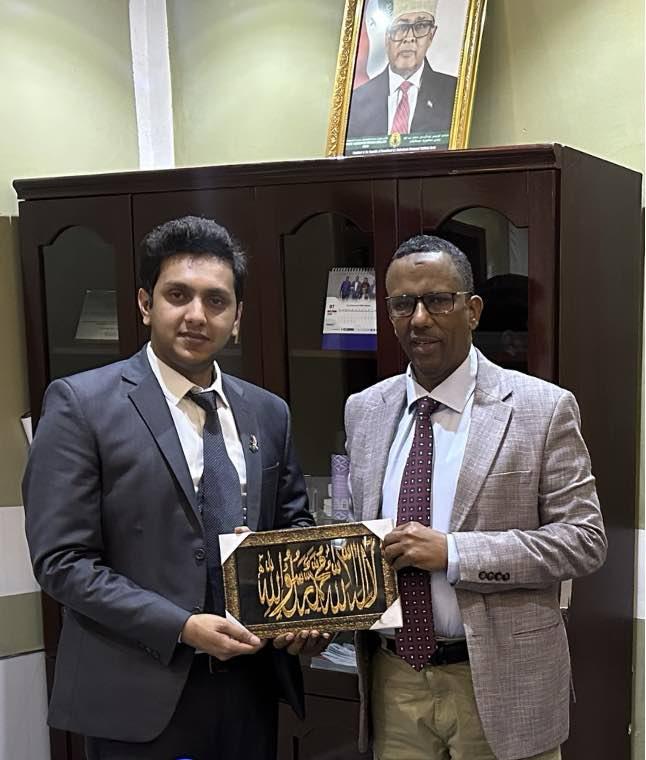
I realized that I will be witnessing something when I responded to the invitation of the Ministry of Energy and Minerals and Minister Eng. Ahmed Jama Barre when I came to visit Somaliland in December 2025. Nevertheless, what had transpired during those few weeks in Hargeisa, the visit to the first-ever International Minerals Expo of Somaliland, and to the first National Livestock Trade and Production Expo, provided much more insight as to a society that was quietly following its own path to economic vibrancy and international relevance.
Somaliland Minerals Expo 2025 in 15-16 December 2025 was more than a display of untapped potential. It was arranged on the theme Somaliland Minerals: From Potential to Prosperity and saw more than 20 countries attended by ministries, investors, technical experts, diplomats and media to look into prospects in the mining and energy industry.
In as diverse countries as the United States, the United Kingdom, Pakistan, Turkey, Abkhazia, Gibraltar, India, South Sudan and many others, the governments and private entities were represented. International companies and local partners took part in discussions regarding regulatory reform, sustainable practices and responsible investment framework. Not only was I honored to speak at these sessions not just as an observer but also as an equal participant in an international discussion on governance, legal traditions, and economic development, a fact which testifies to the receptiveness of Somaliland to international experience and collaboration.
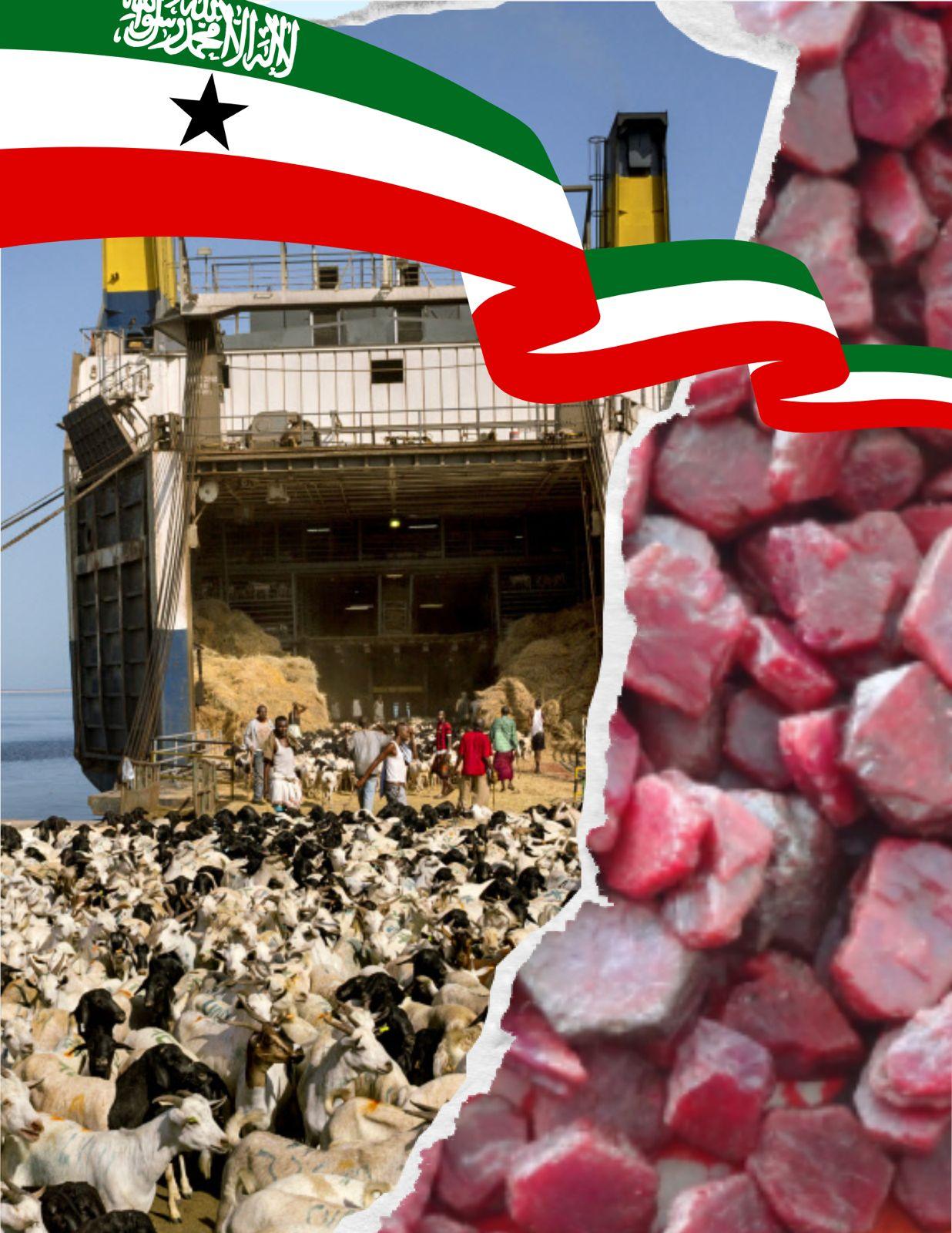
After that on the invitation of Hon. Cumar Shucayb, Minister of Livestock and Rural Development I attended the inaugural National Livestock Trade and Production Expo in Somaliland. This episode highlighted another, though no less important, foundation of the economy. Somaliland is heavily reliant on livestock as the source of 60 percent of its GDP and a means of livelihood to over 70 percent of the population. The government leaders, pastoralists, exporters, the private sector stakeholders, and the investment partners met at the expo to deepen value chains, to learn modern husbandry methods and to plan the market access and processing infrastructure.
This was not so much a celebration, but a strategic move to abandon the old pastoral systems and move to more value-added production, processing, and export preparedness. The talks were made on the feed production, animal health services, cold-chain logistics, climate adaptation, and agricultural technology innovation. This was not without purpose; livestock was not only culture and heritage but it is a platform on which a sustainable economic growth can be established. Also came to know about a significant investment of 20 Million dollars in Livestock Quarantine in Berbera by Central Sky Trading Co. which is another milestone.
These two expos which are different in focus but similar in intent portrayed a Somaliland which is proceeding tentatively but decisively towards economic diversification and functional statehood. Although the decades of neglect have left it off the global radar, the management has invested in institutions, infrastructure, and policy reforms that have opened the door to partnerships with its sense of dependency.
Although these successes at home are noteworthy on their own, the relations of Somaliland with the outside world were in the news at nearly the same time. On 26 December 2025, Israel was the first member state of the United Nations to officially date Somaliland as an independent and sovereign state, a step that has caused ripples in regional and international diplomacy.
The recognition of Israel was presented in the context of a diplomatic breakthrough, one of the components of the broader engagement policy in the Horn of Africa based on mutual security interests and mutual economic cooperation interests.
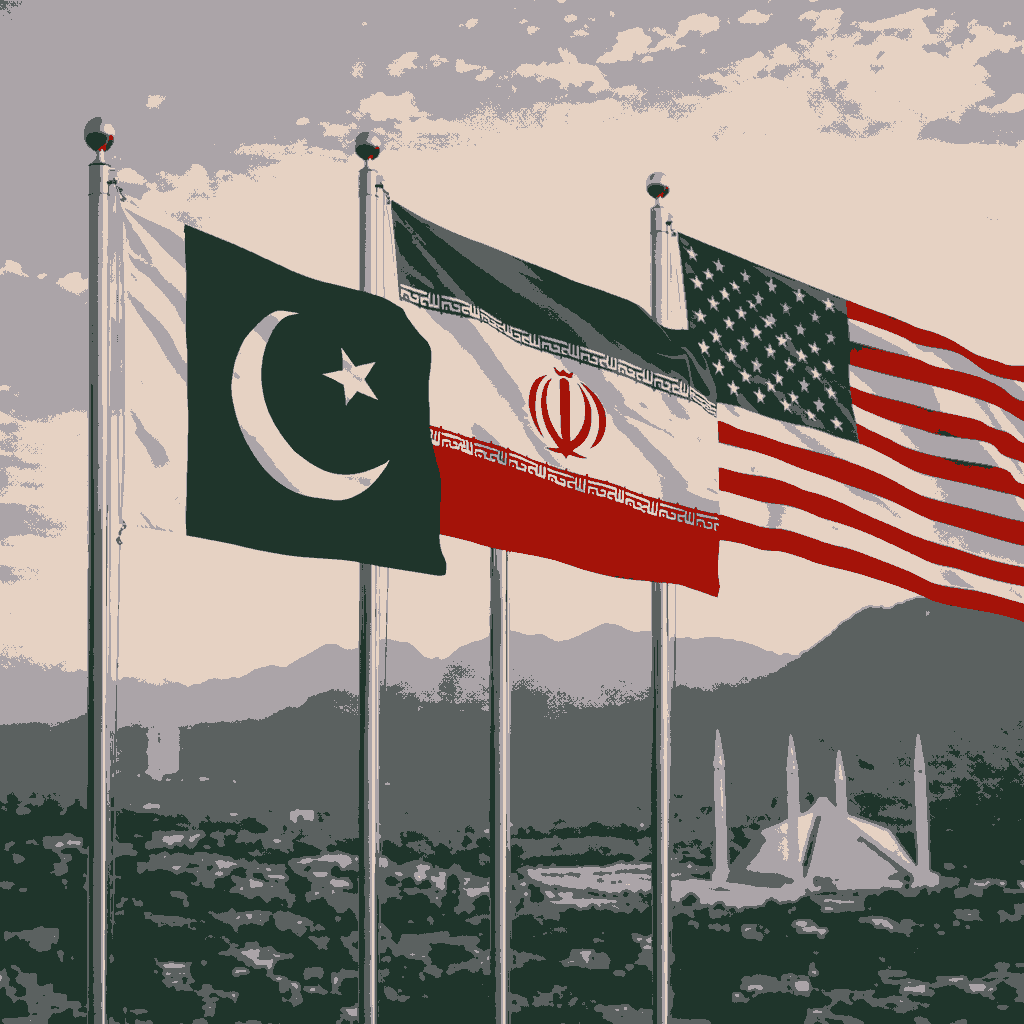
However, this is not a development in a vacuum and basically on a global scale, almost Muslim nations including Pakistan, Turkiye, Saudi Arabia, GCC states and the Organisation of Islamic Cooperation followed by Arab League and African Union. A joint statement came out condemning the move by Israel arguing that it had gone against the international law and had eroded the territorial integrity of Somalia.
The response highlights a geopolitical fault line that the factual development of Somaliland into a de-jure territory is being construed by many as an external intervention into an interim territorial issue. However, there is another side to the matter.
Since the year 1991, Somaliland has existed as its own autonomous entity, with its own institutions of political systems, security services, currency and democratic mechanisms and has never seen much international interference or assistance. The issue that has come to the minds of some observers is not whether Somaliland exists, but how the international community can negotiate the tension between the law and reality on the ground.
History the world over demonstrates that the process of recognition of new states can hardly proceed in a systematic manner. It took only three years since independence that Pakistan recognised Bangladesh; Europe has been able to see the emerging concepts of sovereignty and self-determination. Today, Somaliland is a parallel, not of war, but of agonizingly built governance and stability in the unstable area for three decades.
The thoughts that I had during those weeks in Hargeisa, stemmed out of a quick and easy rule: change usually happens in small steps, with internal strength as an initial push, and external recognition as a secondary catalyst. Evidences in the expos of Somaliland that investment in human potential, credibility of institutions, and economic strategy has the capacity of placing a polity on the edge of wider interaction internationally.
It is the question of intricate negotiation whether the world should ultimately accept the claim of Somaliland as legitimate in terms of political and diplomatic aspects. However, in my position, the nation is not rushing towards a more promising future so briefly and randomly, rather it is a combination of conscious decisions as well as the will to create its own history. With struggle too often in the headlines in the Horn of Africa, Somaliland is writing another script: one of pragmatism, participation, and promise, gradually but with irresistible impetus. Instead of isolating, condemning we have to think that what made a Muslim majority country to accept this deal with Israel? Some countries already have relations with them especially UAE, Kenya and Ethiopia. World is not recognising a state it is acknowledging one which is existing for 34 years. It might be hard but it is a reality as there are no permanent friends and enemies in Geopolitics but permanent interests, we should look into it before it’s late.
This analysis does not imply endorsement of policies or positions of any country, but rather seeks to examine the geopolitical consequences of recent diplomatic developments.
Author is the Editor in Chief of The Advocate Post, He writes perceptive columns on geopolitics, international relations, and legal affairs etc. in more than 15 countries. Moreover he is a lawyer, global affairs & policy advisor, President (Youth) Civil Society Network Pakistan and Consutant (International Cooperation and Media Diplomacy) Lahore Press Club. He can be reached at @arafzal555 on instagram or email abdulrafayafzal@theadvocatepost.org