By: Dr. Ridwan Osman Mohamed (Somaliland)
The Somaliland Livestock Trade and Production Expo 2025 was successfully convened in December 2025 as a national platform to promote livestock production, strengthen trade linkages, and advance value-chain development across Somaliland. Organized by the Ministry of Livestock and Rural Development (MoLRD), the Expo brought together government leaders, livestock producers, pastoralists, traders, exporters, private sector actors, academic institutions, development partners, and investors to jointly assess the status, challenges, and future direction of Somaliland’s livestock sector.
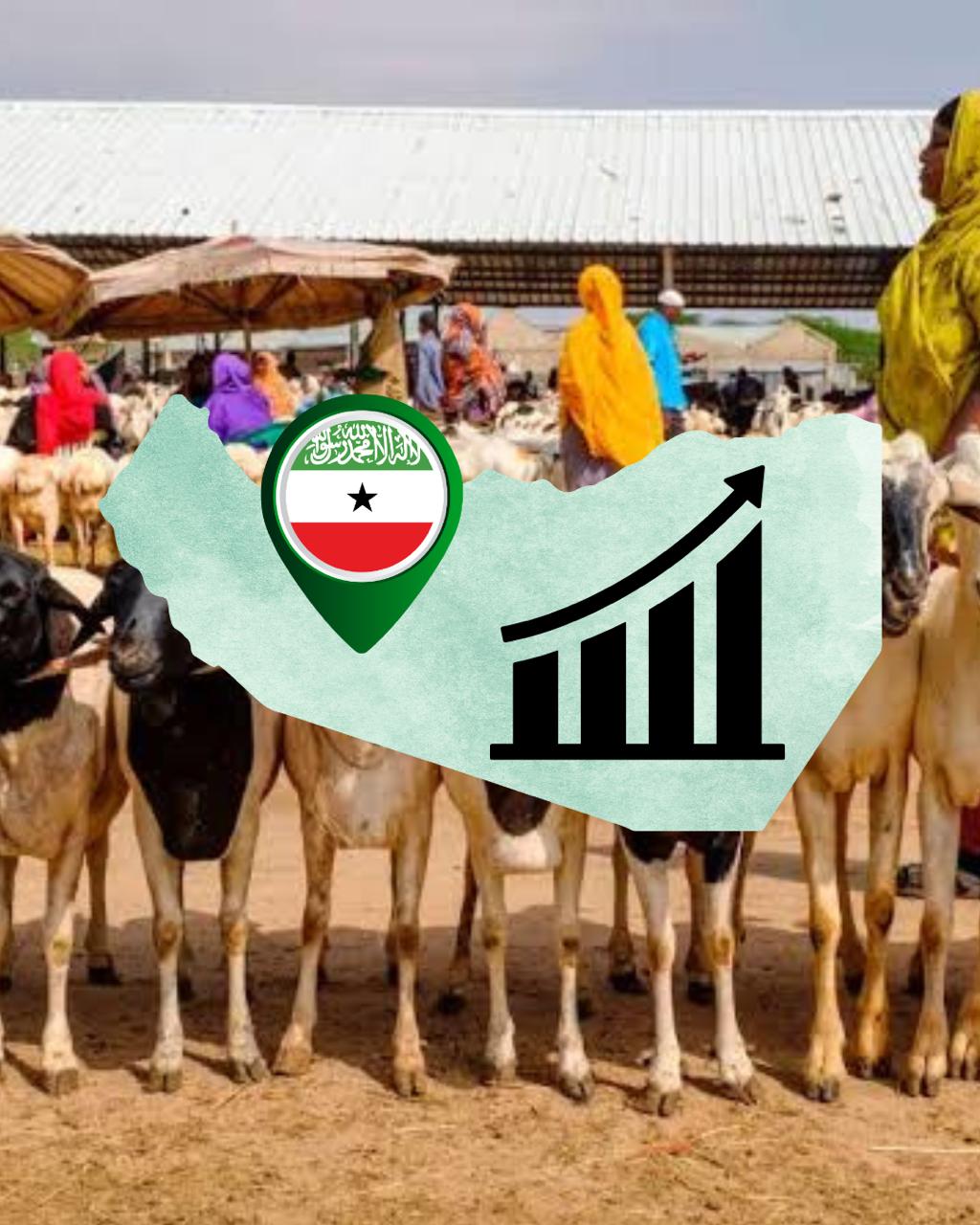
Livestock remains the backbone of Somaliland’s economy, providing livelihoods for over 70 percent of the population and contributing approximately 60 percent of national GDP. The sector is central to food security, employment, and foreign exchange earnings. Somaliland’s livestock production system is predominantly pastoral and agro-pastoral, adapted to arid and semi-arid climatic conditions. Pastoral systems dominate the central and eastern regions, relying on natural rangelands, while agro-pastoral systems in the western regions integrate crop cultivation with livestock rearing, enhancing household resilience.
Small ruminants constitute the largest proportion of herds and form the backbone of the export trade, while camels are highly valued for both milk production and export. These livestock resources supply meat, milk, hides, skins, eggs, and other by-products essential for domestic consumption and income generation.
Somaliland is a major exporter of live animals to regional and Gulf markets. In 2024, the country exported an estimated 3.7 million head of livestock, mainly sheep and goats, with camels and cattle exported in smaller numbers. Key export destinations include Saudi Arabia, the United Arab Emirates, Yemen, Oman, and Bahrain, with peak demand occurring during the Hajj season. Livestock marketing is anchored around major domestic markets such as Burao (Yirowe), Hargeisa, and Berbera, with Berbera Port serving as the primary export gateway. Quarantine services and veterinary inspections play a critical role in meeting international animal health and quality standards.
Against this background, the Expo served as a strategic forum to showcase national production potential, promote innovation, and facilitate dialogue on strengthening competitiveness and resilience. The event attracted 150 participants and featured 36 exhibitors representing producers, cooperatives, veterinary service providers, dairy and meat processors, fodder producers, beekeeping enterprises, agribusinesses, and academic institutions. Exhibitions demonstrated advances in livestock feed production, dairy and meat value addition, poultry and egg production, honey processing, veterinary pharmaceuticals, and cooperative-based business models.
The Expo program included 10 technical presentations delivered by experts from government institutions, universities, research centers, and the private sector. These presentations addressed critical themes such as livestock production systems, grazing reserve land management, animal health and disease surveillance, alternative livestock feed and fodder systems, climate change adaptation, digital cooperative registration platforms, and seasonal climate forecasts. Particular emphasis was placed on the role of grazing reserves as drought buffers, the importance of local fodder production to reduce feed shortages, and the integration of climate-smart practices to sustain productivity.
Two high-level panel discussions, involving 10 panelists, provided in-depth analysis of livestock production economics and livestock trade and marketing. Discussions highlighted the need to transition from traditional extensive systems toward semi-intensive and intensive production models, particularly for dairy, fattening, poultry, and fodder. Panelists emphasized that value addition in meat, milk, hides, skins, and eggs presents a major opportunity to increase incomes, create jobs, and retain more value within the country. Constraints such as disease outbreaks (including PPR and FMD), limited processing infrastructure, weak quality control, feed shortages, and climate shocks were identified as key challenges requiring coordinated action.
Key remarks from senior leadership underscored the strategic importance of the livestock sector. H.E. the President of the Republic of Somaliland reaffirmed government commitment to modernizing livestock production, rehabilitating rangelands, strengthening climate resilience, and encouraging fair and mutually beneficial investment. The Minister of Livestock and Rural Development emphasized the Expo’s role in fostering innovation, partnerships, and value-chain integration, while other ministers and stakeholders highlighted the links between livestock, climate change, environmental sustainability, and economic diversification.
The Expo concluded with a strong consensus on priority actions for the sector’s future. Participants agreed to institutionalize the Somaliland Livestock Trade and Production Expo as an annual national event, recognizing its value as a platform for trade promotion, investment attraction, and policy dialogue. Calls were made to scale up public and private investment in livestock processing, feed production, cold chains, market infrastructure, and national grazing reserve lands across all regions. Strengthening animal health services, improving access to finance, enhancing research and academic collaboration, and supporting women and youth participation were identified as essential to sustainable sector growth.
Overall, the Somaliland Livestock Trade and Production Expo 2025 marked a significant milestone in advancing a shared vision for a resilient, competitive, and value-driven livestock sector. With continued leadership from the Ministry of Livestock and Rural Development, strong stakeholder collaboration, and sustained investment, the outcomes of the Expo provide a solid foundation for accelerating economic growth, improving livelihoods, and safeguarding Somaliland’s most vital economic asset.