Islamabad emphasizes “open regionalism” as Dhaka calls Pakistan-centric bloc strategically viable
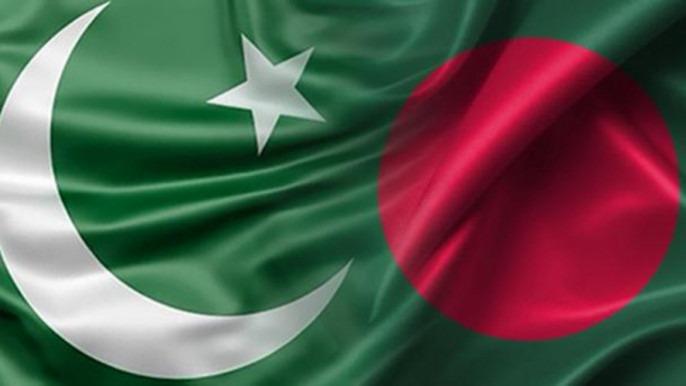
Pakistan and Bangladesh appear to be cautiously testing the waters of a new regional political and economic alignment, following remarks from senior officials in Dhaka and Islamabad suggesting that cooperation between the two countries—without India—may be strategically feasible.
The discussion gained momentum after Bangladesh’s Foreign Affairs Adviser Md Touhid Hossain publicly stated that Dhaka could consider joining a regional grouping with Pakistan that excludes India, a comment that has drawn attention across South Asia’s diplomatic circles.
Islamabad’s measured response
Pakistan’s Foreign Office responded with diplomatic restraint, signaling openness without committing to any formal framework.
“Pakistan believes in multilateralism and inclusive cooperation,” Foreign Office spokesperson Tahir Hussain Andrabi said in Islamabad. “Any proposal from Bangladesh would be viewed in that same constructive spirit.”
The statement stops short of endorsing a specific alliance but underscores Pakistan’s willingness to explore flexible regional arrangements amid shifting geopolitical realities.
Strategic logic behind Dhaka’s stance
Hossain framed Bangladesh’s position in strategic, rather than ideological, terms. While noting that Bangladesh could pursue cooperation with Pakistan independently of India, he stressed that such an option would not be practical for countries like Nepal or Bhutan due to their geography and economic reliance on New Delhi.
Analysts say the comments reflect Dhaka’s growing confidence in diversifying its foreign policy partnerships, particularly as Bangladesh’s economy expands and its regional footprint widens.
China emerges as a key pillar
Adding another layer to the evolving picture is China’s growing role. Pakistan’s Foreign Minister Ishaq Dar recently disclosed that a trilateral mechanism involving Pakistan, Bangladesh, and China is already operational.
The initiative, launched earlier this year, held its first formal meeting in June in Kunming, China. Senior diplomats from all three countries participated, focusing on cooperation in trade, infrastructure, technology, and regional connectivity.
“There could be flexible groupings with variable geometry,” Dar said, suggesting that the platform could expand to include additional regional or extra-regional partners depending on shared interests.
Emphasis on non-confrontation
A joint statement issued after the Kunming meeting emphasized that the trilateral framework is based on principles of openness, equality, and mutual trust, and is not aimed at isolating or confronting any third country.
This language appears designed to ease concerns in the region, particularly about the potential erosion of existing South Asian mechanisms such as SAARC, which has remained largely inactive in recent years.
Economic drivers behind diplomacy
Beyond politics, economics is emerging as a powerful motivator. China’s annual trade with both Pakistan and Bangladesh is estimated at around $23 billion, and officials see untapped potential in supply chain integration, port connectivity, and industrial cooperation linking South Asia with Southeast Asia and western China.
Bangladesh’s manufacturing base, Pakistan’s connectivity corridors, and China’s investment capacity could, in theory, form a complementary triangle of cooperation.
A shift in South Asian dynamics?
While the idea of a Pakistan-Bangladesh alignment without India remains at an exploratory stage, diplomats and observers say the conversation itself is significant. It reflects a broader trend toward issue-based coalitions rather than rigid regional blocs.
Whether these discussions translate into a formal structure or remain a loose consultative mechanism, they highlight how South Asia’s diplomatic landscape is slowly adjusting to new economic priorities and geopolitical realities—where flexibility, rather than fixed alliances, may define the next phase of regional cooperation.