
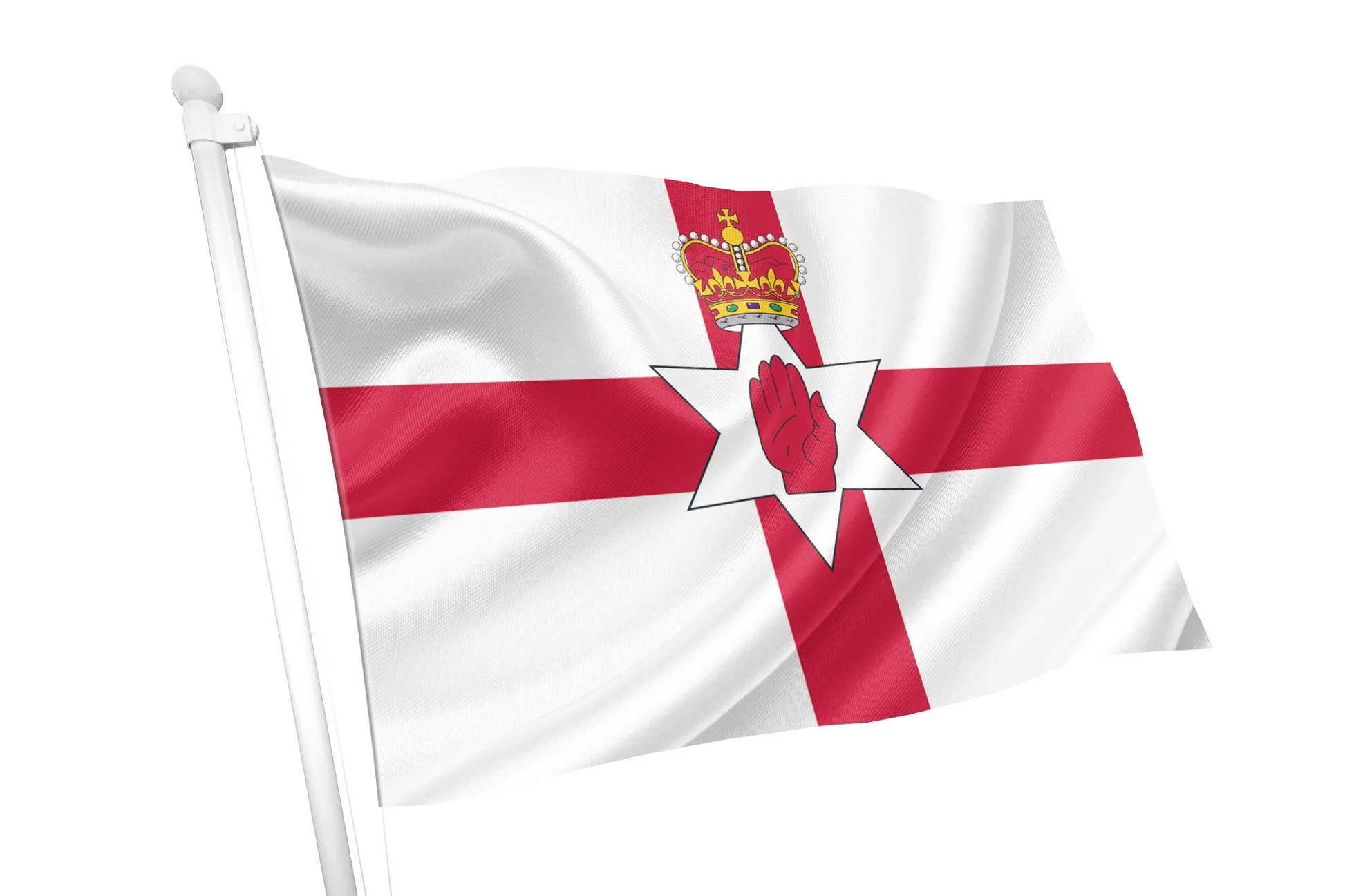
Ten years after the 2016 referendum, one uncomfortable fact remains: Brexit was not implemented on the same constitutional terms throughout the United Kingdom. Northern Ireland left the European Union politically, but under the Protocol on Ireland/Northern Ireland, as adjusted by the Windsor Framework, it remains aligned with a significant body of EU rules governing goods and related areas. The arrangement was designed to avoid a hard land border on the island of Ireland and protect the Belfast/Good Friday Agreement. Its price was a regulatory frontier in the Irish Sea.
That frontier is not merely an administrative inconvenience. It raises a question about the legal character of the Union itself. Article VI of the Acts of Union 1800 promised that subjects in Great Britain and Ireland would be on the same footing in matters of trade. In Allister, the courts accepted that the Protocol conflicted with, or was inconsistent with, that guarantee. The UK Supreme Court nevertheless held that Section 7A of the European Union (Withdrawal) Act 2018 gave the later treaty arrangements domestic legal priority, modifying Article VI for as long as the Protocol applies.
The distinction is crucial. Judicial confirmation of legality is not a declaration of constitutional normality. Parliamentary sovereignty permits Parliament to legislate asymmetrically and even to alter the practical effect of an older constitutional statute. But the fact that Parliament possesses the legal power to do so does not answer whether the resulting settlement is politically legitimate, democratically accountable or compatible with the spirit of an equal union.
The Windsor Framework reduced some of the original Protocol’s burdens. It created an internal market system—commonly described as a green lane for goods from Great Britain intended to remain in Northern Ireland, while goods considered at risk of entering the EU single market move through a red lane and face full controls. Yet a simplified border remains a border. Data requirements, trusted-trader conditions, labelling rules and enforcement mechanisms continue to distinguish movements from Great Britain to Northern Ireland from ordinary domestic trade.
The much-publicised Stormont Brake is also narrower than its name suggests. It is not a general veto over EU law, nor does it give Northern Ireland representatives a seat in the EU legislative process. It is an exceptional mechanism for objecting to certain new or amended EU rules, subject to legal thresholds and further action by the UK Government within the structures of the Withdrawal Agreement. It mitigates rule-taking; it does not eliminate it.
The democratic consent vote of December 2024 exposed the political weakness beneath the legal structure. The Northern Ireland Assembly voted by 48 to 36 to continue the relevant provisions, but every Unionist-designated member voted against. The vote therefore passed by a simple majority without cross-community support, triggering an independent review and requiring another vote in 2028.
Legally, the prescribed consent mechanism was satisfied. Constitutionally, the matter is less settled. The Good Friday Agreement does not require cross-community voting for every public decision. Yet an arrangement that materially affects Northern Ireland’s economic relationship with the rest of the United Kingdom cannot be treated as fully legitimate when it lacks the support of the community most concerned with maintaining the Union. Majoritarian legality is not always sufficient in a constitutional order built upon power-sharing and mutual consent.
There are, however, realities that critics must acknowledge. The Framework preserves an open border on the island, protects North-South commerce and gives Northern Ireland unusual access to both the UK internal market and the EU single market for goods. The proposed UK–EU sanitary and phytosanitary agreement, intended to take effect in 2027, should reduce many food and agricultural barriers between Great Britain and Northern Ireland.
But even that solution illustrates the underlying dilemma. Friction is to be reduced partly by aligning Great Britain more closely with EU sanitary and phytosanitary rules. The border becomes less visible not because Northern Ireland is restored to the same regulatory position as the rest of the UK, but because regulatory distance between Britain and the EU is narrowed. This may be economically sensible, but it is a policy choice with constitutional consequences and should be described honestly.
The answer is not a reckless return to a hard border on the island of Ireland, nor unilateral disregard of an international treaty. A durable reform must instead strengthen democratic control: meaningful Northern Irish participation in UK–EU decision-making, binding consultation before relevant EU rules take effect, rigorous scrutiny at Westminster and Stormont, clearer safeguards for internal UK trade, and a consent process capable of securing support across both constitutional traditions.
The Windsor Framework may be lawful. It may also be the least disruptive arrangement presently available. But it cannot be treated as the final word. Brexit remains constitutionally incomplete while one part of the United Kingdom is governed in material economic fields by rules it does not help enact and is separated from the rest of the country by internal trade controls.
Law can authorise a compromise. Only democratic consent can make it durable.