Timor-Leste, ASEAN & the Future of Small-State Development
Timor-Leste Is Not Simply a Post-Conflict Success Story
By Abdul Rafay Afzal (Editor in Chief – The Advocate Post)
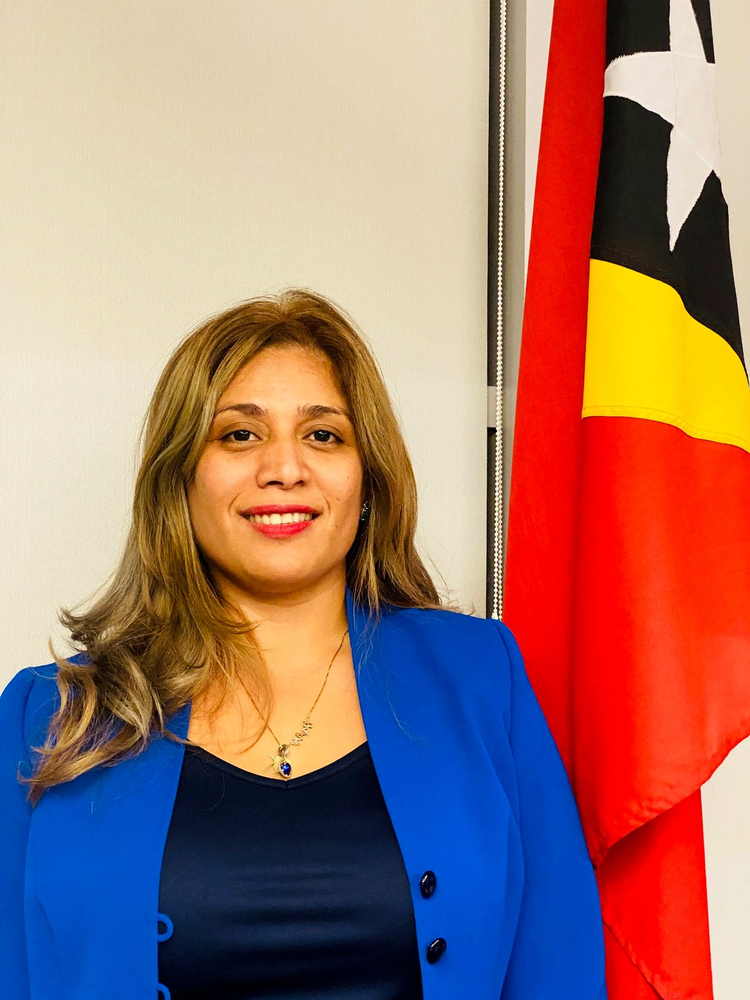
Hon. Felícia Carvalho is the former Vice-Minister of Finance of the Democratic Republic of Timor-Leste. With experience in public finance, development-partner coordination, governance, public administration, and international institutional engagement, she has remained closely associated with Timor-Leste’s national development journey and its transition from post-conflict recovery toward sustainable growth and regional integration.
In an Exclusive Interview with Abdul Rafay Afzal, Editor-in-Chief of The Advocate Post, Hon. Felícia Carvalho discussed Timor-Leste’s development journey, ASEAN integration, public financial management, youth, economic diversification, public-private partnerships, digital governance, women in leadership, and the importance of international partnerships that respect national ownership.
Executive Summary
In this Exclusive Interview, Hon. Felícia Carvalho reflects on Timor-Leste’s remarkable journey from conflict to peace, democratic statehood, and regional engagement. She describes the country’s greatest achievement as its successful transition from colonisation, occupation, referendum, independence, and crisis toward democratic institutions, political stability, and peaceful transfers of power.
Speaking from her experience as former Vice-Minister of Finance, she emphasises that sound public financial management is fundamental to national development. She highlights transparency, procurement planning, budget execution, fiscal discipline, and public trust as essential pillars of state-building.
She also discusses Timor-Leste’s ASEAN integration as a transformative opportunity, especially for youth, labour mobility, trade, investment, customs modernisation, logistics, and regional learning. At the same time, she stresses that Timor-Leste must diversify beyond petroleum revenues, strengthen human capital, improve digital governance, protect data, and preserve institutional memory.
On development partners and public-private partnerships, Carvalho argues that international support must strengthen national systems rather than create parallel structures. She underlines that partnerships must be based on value for money, national interest, technical due diligence, and respect for sovereignty.
Her concluding message to the international community is clear: Timor-Leste is not simply a post-conflict success story; it is a country with significant potential and a clear vision for its future.
Q1: Timor-Leste is one of the world’s youngest democracies. What do you consider the country’s most important achievements so far?
Timor-Leste’s greatest achievement has been its successful transition from conflict to peace and democratic statehood.
Our history includes colonisation, occupation, the 1999 referendum, the restoration of independence, and the 2006 crisis. Yet, in just over two decades, Timor-Leste has built democratic institutions, maintained political stability, and conducted multiple peaceful transfers of power.
That is not a small achievement for a young state.
The country has demonstrated resilience throughout its state-building efforts. We have strengthened government structures and public institutions while preserving social cohesion. We have also worked to translate international practices into our own local context from laws to policies and now the most important challenge is to ensure that implementation takes place and remains sustainable.
Another important achievement is human-resource development. We are preparing public servants and strengthening public administration. Many public servants joined the administration immediately after independence, when the country had limited choices. Today, we have a new generation graduating from universities inside Timor-Leste and overseas, through scholarships and their own efforts.
Timor-Leste’s development journey has maintained a national aspiration: to say goodbye to conflict and welcome development. The end of the United Nations mission in 2012 allowed the country to move from being seen primarily through humanitarian assistance toward being recognised as a developing country seeking to reach middle-income status through its national development plan.
Q2: Do you think the international community still misunderstands Timor-Leste?
Sometimes, yes. The international community may still look at Timor-Leste through an old lens, as if it were only a post-conflict or humanitarian country.
But Timor-Leste today is trying to catch up with the rest of the world, move away from poverty, and build a more prosperous economy. We are still young, but we are moving forward.
Timor-Leste is not simply asking for help. It is building its own direction. It wants partnerships that recognise its progress, sovereignty, and development vision.
Q3: As former Vice-Minister of Finance, how do you view the role of public financial management in national development?
Sound public financial management is fundamental to national development.
It ensures that public resources are managed transparently, efficiently, and in alignment with national priorities. The Ministry of Finance plays a critical role in long-term fiscal strategy, government expenditure, revenue systems, and ensuring that development finance supports the country’s strategic development plan.
Transparency is very important. Timor-Leste has a transparency portal that allows the public to access information on government budget execution. Citizens can see how ministries are executing their budgets.
We have also launched a procurement portal. After the budget is approved by Parliament, the public should be able to see how ministries are using their allocations.
Budgeting is not only about allocating money. It is also about forecasting, monitoring, reporting, and measuring results. When ministries request budgets, we must ask whether the money is for operational costs or for programmes that directly improve services.
Transparency builds public trust. It also builds confidence in institutions.
Q4: Many small states struggle to balance fiscal discipline with public needs. How can governments manage this responsibly?
Balancing fiscal discipline with development needs requires strategic planning, difficult decisions, and effective implementation.
When we talk about healthcare, education, infrastructure, and social protection, we are ultimately talking about service delivery. People need services, but service delivery requires equipment, personnel, systems, planning, and accountability.
Fiscal sustainability does not depend only on how much money is allocated. It also depends on how well the budget is executed.
For example, when a ministry asks for a budget, we need to ask: is this for operational costs, or is it for a policy or programme that will improve healthcare, education, or infrastructure? Will it result in more health workers actually being present in clinics? Will it ensure teachers are present in schools?
Sometimes people say the budget for healthcare or education is not enough. But the deeper question is: not enough for what? Personnel? Infrastructure? New programmes? Direct service delivery?
From the Ministry of Finance perspective, resources must be directed toward programmes that actually improve performance and reach people. These discussions may sound technical, but they are the practical foundation of governance.
Q5: What opportunities can ASEAN integration create for Timor-Leste?
ASEAN membership presents a transformative opportunity for Timor-Leste.
For young people, it is especially important. Timor-Leste has a young population, and we must create opportunities for them. ASEAN can help us think more strategically about labour mobility, skills, training, and exposure.
The benefit is not only remittances. It is also mindset change, skills development, and the ability of young people to return home with experience and perhaps enough capital to start something of their own.
Economically, Timor-Leste is a small economy, but its dollarised financial system offers stability that can attract investors. ASEAN membership also gives us an opportunity to learn from other countries, especially in supply chains, manufacturing, logistics, customs modernisation, trade facilitation, and regional connectivity.
For investment, the question is how Timor-Leste can gain the confidence of direct investors and not rely only on public tenders or public contracts. We need to improve the business environment, registration processes, ease of doing business, and human-resource capacity.
But ASEAN is not only about what Timor-Leste can receive. Timor-Leste also has something to offer. We have a post-conflict success story, experience in state-building, and experience in securing our maritime boundary with Australia. These are lessons others can learn from.
Q6: What role should development partners, investors, and public-private partnerships play in Timor-Leste’s development?
International development partners have been instrumental in Timor-Leste’s journey since independence. But going forward, they should focus on strengthening national systems rather than creating parallel structures.
When partners provide technical assistance, grants, loans, or project support, the question should be: how does this build government capacity? How does it use and strengthen national systems? What knowledge does it leave behind?
Responsible investors and public-private partnerships also have an important role. One successful example is Timor Port, which shows that public-private partnership can work in practice, not only on paper.
There is no perfect PPP model. But countries must take informed risks and develop models that work for their own context.
At the same time, Timor-Leste must defend its national interest. Any major agreement must be examined carefully: value for money, detailed engineering design, contract terms, long-term obligations, and whether the arrangement is truly beneficial.
A partnership must be win-win. It must support development while respecting sovereignty and fiscal responsibility.
Q7: How can Timor-Leste reduce dependence on petroleum revenues?
Diversification is one of Timor-Leste’s most important long-term challenges.
Petroleum revenues have played a major role in the country’s fiscal position, but Timor-Leste cannot depend on petroleum forever. We must strengthen other sectors and create more productive economic activity.
Tourism, agriculture, fisheries, manufacturing, services, digital development, and regional trade all have potential. But diversification requires more than identifying sectors. It requires infrastructure, skills, investor confidence, trade facilitation, and a business environment that supports private-sector growth.
The central question is how to create a productive economy that does not depend only on government spending or petroleum revenue.
Q8: Which areas are most urgent for Timor-Leste: healthcare, education, digital governance, or human capital?
These areas are interconnected and should not be treated in isolation.
Healthcare, education, digital governance, and human capital all relate to the ability of the state to deliver services and plan effectively. From a finance perspective, these sectors also require good data, proper budgeting, implementation capacity, and clear priorities.
Let me focus on digital governance. One of the basic infrastructure challenges is fast and reliable internet. Timor-Leste is working on fibre-optic connectivity, and other connectivity options also exist. But connectivity alone is not enough.
We must think about data protection, privacy, cybersecurity, and the ability of systems to communicate with each other. Many government data systems do not yet interface properly.
When ministries request budgets, they need facts. The data may not be perfect, but it must be good enough for decision-making.
Institutional memory is also a challenge. When people leave, institutions often lose knowledge. The goal must be to ensure that knowledge remains within the institution.
In my view, one of the most urgent issues is mindset and behaviour change. Infrastructure can be built within a few years, but changing institutional culture, management practices, and attitudes toward data and accountability takes longer.
Q9: How can Timor-Leste preserve sovereignty while working with international partners?
The foundation is strong national leadership and ownership.
International partners should support country-led priorities and use national systems whenever possible. They must listen before they prescribe solutions. A one-size-fits-all model does not work.
Timor-Leste has its own history, institutions, context, and development plan. The plan may not be perfect in the eyes of the world, but it belongs to the country and reflects national priorities.
Development cooperation should strengthen national institutions, not create dependency. It should leave behind capacity, knowledge, systems, and confidence.
Q10: As a woman who served in senior public leadership, what challenges and responsibilities come with that role?
Serving in a senior position at the Ministry of Finance carries pressure because finance is at the heart of the state.
For women, there are additional expectations. Sometimes expectations are very high; sometimes women are underestimated. Both create pressure.
Women in leadership must master not only leadership, but also management. Management skills are essential: finance, logistics, reporting, planning, administration, and understanding how systems work.
Women must also be willing to accept criticism and turn it into opportunity. When you are given responsibility, you are not there merely to prove yourself. You are there to demonstrate the best that you can do.
Another responsibility is knowledge transfer. While serving in an institution, you should transfer knowledge to those who work with you. That is part of legacy. When you leave, the institution should be stronger.
Women leaders are not only decision-makers. They are also role models for future generations.
Q11: What message would you give to young women aspiring to leadership?
My message is to invest in yourself.
Learn continuously. Build your skills. Understand management, not only leadership. Know how institutions work. Be prepared to handle criticism. See responsibility not as a burden, but as an opportunity to serve and to demonstrate your capacity.
Young women should also understand that leadership is not only about personal success. It is about service, knowledge transfer, and creating space for others to grow.
If you are given responsibility, use it well. Do your best, and make sure that your work benefits not only you, but also the institution and the generation that comes after you.
Q12: Finally, how would you like the international community to understand Timor-Leste today?
My message to the world is that Timor-Leste is not simply a post-conflict success story. It is a country with significant potential and a clear vision for its future.
We welcome partners who are willing to walk alongside us — not ahead of us — as investors, collaborators, and friends in our development journey.
Timor-Leste has challenges, but it also has identity, resilience, ambition, and a young population that wants opportunity. The international community should understand Timor-Leste not only through what it has overcome, but through what it is trying to become.
Abdul Rafay Afzal is the Editor in Chief of The Advocate Post, recognised as Pakistan’s youngest international journalist. He writes perceptive columns on geopolitics, international relations, and legal affairs in more than 15 countries. Moreover, he is a lawyer, global affairs & policy advisor, President (Youth) Civil Society Network Pakistan, and Consultant for International Cooperation and Media Diplomacy at Lahore Press Club.
He can be reached at @arafzal555 on Instagram or email abdulrafayafzal@theadvocatepost.org
Editorial Insight:
Hon. Felícia Carvalho’s reflections present Timor-Leste not merely as a post-conflict country, but as a young democracy actively defining its future through public finance reform, regional integration, institutional development, and national ownership.
Her emphasis on transparency, fiscal discipline, ASEAN integration, women’s leadership, and respectful international partnership reflects the broader challenges facing many small and emerging states across the Global South. For Timor-Leste, the next chapter will depend not only on foreign investment or development assistance, but on the strength of its own institutions, the capacity of its young population, and the quality of partners willing to walk alongside it.
Disclaimer:
The views, statements, and policy positions expressed in this interview are solely those of the interviewee and are published as part of The Advocate Post’s commitment to public discourse, governance dialogue, and journalistic engagement. Publication of this interview does not necessarily constitute institutional endorsement of all opinions or claims presented therein.