
Pakistan’s environmental crisis can no longer be treated as a secondary policy concern. From toxic air in major cities to recurring floods, water scarcity, deforestation, and rising temperatures, environmental degradation is now directly affecting public health, economic stability, and everyday life. Yet these problems are not only ecological. They also expose the condition of Pakistan’s constitutional governance and the extent to which its institutions are fulfilling their assigned roles. In that sense, environmental governance offers an important lens through which to examine the practical operation of the separation of powers in Pakistan.
In constitutional theory, the separation of powers requires the legislature to make laws, the executive to implement them, and the judiciary to interpret and enforce them. Pakistan formally follows this model, but the environmental sphere reveals a far more uneven reality. Some institutions have acted with urgency, while others have struggled with inertia, fragmentation, or weak enforcement. The result is an imbalance in which the judiciary has increasingly assumed a central role, often compensating for the shortcomings of the political branches.
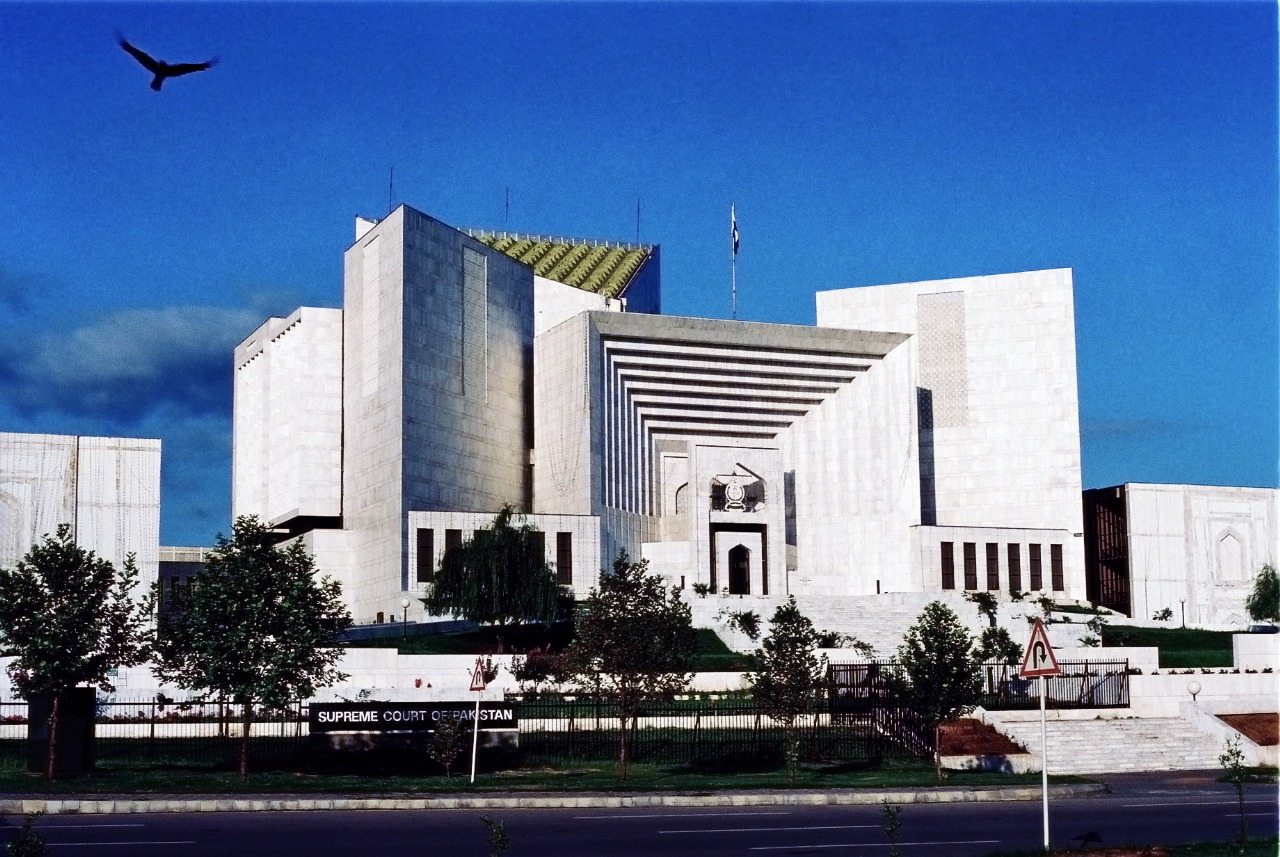
One of the most striking features of Pakistan’s environmental framework is that the Constitution does not expressly guarantee a right to a clean or healthy environment. On its face, that omission appears significant. However, the courts have addressed it through constitutional interpretation, most notably by expanding Article 9, the right to life, to include the right to live in a safe and healthy environment. This judicial development was transformative. In Shehla Zia v WAPDA, the Supreme Court recognised that environmental hazards could threaten fundamental rights, thereby constitutionalising environmental protection without an explicit textual amendment. In doing so, the Court converted environmental harm from a matter of policy preference into a question of rights and state obligation.
This judicial creativity filled an important gap, but it also revealed a legislative deficiency. Pakistan does possess a statutory framework for environmental regulation, chiefly through the Pakistan Environmental Protection Act. That legislation created the basic machinery for pollution control, environmental standards, and regulatory agencies. Yet the broader legislative landscape remains incomplete and, in many respects, outdated. After the Eighteenth Amendment, environmental regulation was largely devolved to the provinces. In principle, devolution allowed local institutions to tailor responses to regional ecological conditions. In practice, however, it also generated fragmentation. Provincial regimes now vary in quality, capacity, and enforcement, producing inconsistency where national coordination is badly needed.
Pakistan’s environmental governance exposes a clear institutional imbalance. The legislature has failed to keep pace with modern threats such as climate change, plastic pollution, rapid urbanisation, and industrial expansion. Even where laws exist, they are often vague, poorly integrated, or subordinated to economic priorities, leaving the legal framework fragmented and lacking long-term coherence.
The executive branch is similarly weak. Federal and provincial environmental agencies are formally tasked with enforcement, monitoring, licensing, and environmental impact assessment, yet in practice they often lack funding, expertise, inspection capacity, and institutional independence. Their decisions may also be shaped by political pressure, particularly in matters involving powerful industries or major development projects. Consequently, enforcement is inconsistent and sanctions are often too weak to deter violations.
In this context, the judiciary has become the most active institution in environmental protection. Pakistani courts, particularly the superior courts, have intervened in matters ranging from pollution and urban planning to forest loss, water governance, and climate policy. In Asghar Leghari, for example, the Lahore High Court pressed the state to implement its climate change policy more effectively and established a commission to monitor progress. Such interventions have strengthened accountability and advanced public recognition of environmental rights.
However, judicial activism also carries constitutional risks. Courts are not institutionally designed to act as long-term policymakers or administrators. Although intervention may be justified where the legislature is ineffective and the executive inactive, it cannot serve as a permanent substitute for ordinary governance. Environmental governance in Pakistan therefore reveals not the failure of one branch alone, but a structural imbalance among all three. A durable solution requires stronger laws, more capable and independent executive agencies, and a judiciary that protects rights while reinforcing, rather than replacing, the constitutional responsibilities of the political branches.
Author is freelance writer, writes about social issues of Pakistan.