
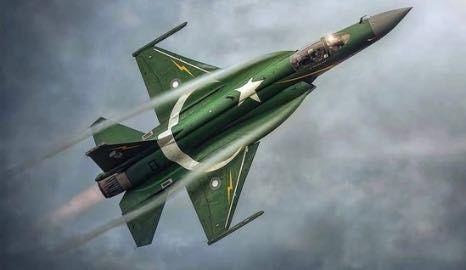
Mogadishu: Somalia is reportedly in advanced negotiations with Pakistan to purchase 24 JF-17 Thunder Block III fighter jets in a defence agreement valued at approximately $900 million, marking what could become the largest military acquisition by Mogadishu since the collapse of its central government in 1991.
The potential deal highlights Somalia’s push to modernize its air force while reinforcing Pakistan’s position as a growing global defence exporter.
Somali Air Force Delegation Visits Islamabad
The negotiations gained momentum after a high-level Somali Air Force delegation, led by Commander Mohamud Sheikh Ali, visited Islamabad earlier this month.
According to Somali defence officials, the proposed acquisition of the JF-17 Thunder Block III fighter jets is aimed at restoring full sovereign control over Somalia’s airspace and reducing dependence on foreign security partners.
“Our airspace must be protected by Somali hands,” a Somali defence ministry official stated, emphasizing the move as a step toward national security autonomy and long-term institutional rebuilding.
What Makes the JF-17 Thunder Attractive?
The JF-17 Thunder, co-developed by the Pakistan Aeronautical Complex and China’s Chengdu Aircraft Corporation, is widely regarded as a cost-effective multirole combat aircraft.
Key advantages include:
Advanced AESA radar system (Block III variant)
Beyond-visual-range (BVR) missile capability
Modern avionics and electronic warfare systems
Lower operational and maintenance costs
Competitive unit price of $30–40 million
Pakistan’s Defence Production Minister Raza Hayat Harraj has previously noted that while some Western fighter jets may offer higher-end technology, they can cost more than three times the price of the JF-17.
Pakistan Expands Defence Exports
The potential Somalia-Pakistan defence deal reflects Islamabad’s growing footprint in global arms markets.
The JF-17 has already been exported to:
Myanmar
Nigeria
Azerbaijan
The aircraft has also generated interest from Bangladesh, Iraq, Libya, and Saudi Arabia.
Security experts say the platform positions Pakistan as a flexible, politically neutral mid-tier defence supplier, particularly attractive to emerging security markets in Africa and Asia.
Strategic Importance for Somalia
If finalized, the $900 million agreement would significantly enhance Somalia’s:
Airspace control
Coastal surveillance capability
Counterterrorism operations against al-Shabaab
National defence autonomy
Somalia’s air force effectively collapsed during the 1990s civil war, leaving the country reliant on foreign partners for aerial security operations.
The negotiations follow the 2023 lifting of the UN arms embargo on Somalia, which opened the door for legitimate military modernization.
Operational Challenges Ahead
While the deal signals a major strategic shift, analysts caution that successful operationalization will require:
Pilot training programs
Technical and maintenance infrastructure
Radar and air defence systems
Airfield upgrades
Long-term logistics and spare parts supply
Reports suggest the agreement may include integrated training, weapons packages, and long-term support arrangements to ensure sustainability.
Geopolitical Implications in the Horn of Africa
The Horn of Africa has increasingly become a zone of strategic competition involving regional and global powers. A defence partnership between Somalia and Pakistan could reshape regional security dynamics while strengthening long-term military ties between Mogadishu and Islamabad.
At an estimated $900 million, the proposed transaction underscores Pakistan’s ability to compete globally on price, capability, and strategic flexibility while signaling Somalia’s determination to rebuild its military institutions after decades of instability.