
By: Eng. Abdi Ali Barkhad (Somaliland)
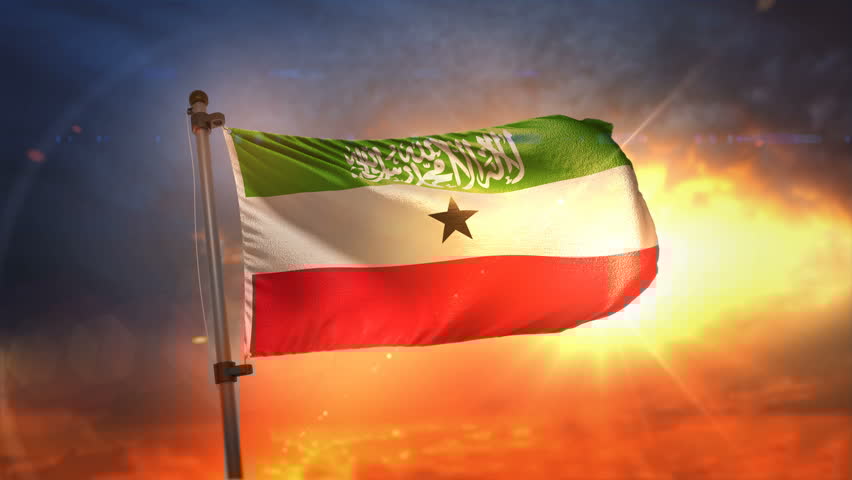
Since 1991, the Republic of Somaliland has existed as a self-governing political entity following the collapse of the Somali Democratic Republic. Despite maintaining internal peace and functioning institutions for more than three decades, Somaliland has remained outside the formal system of international recognition. This prolonged diplomatic isolation represents one of the most enduring anomalies in contemporary international relations.
The purpose of this paper is to analyze Somaliland’s political trajectory and the gradual evolution of its external engagement after 34 years of isolation. It situates Somaliland’s experience within broader debates on statehood, recognition, and post-conflict governance. The study argues that Somaliland’s case challenges conventional assumptions about sovereignty by demonstrating that effective governance and legitimacy can exist independently of formal recognition.
Somaliland was a British protectorate that attained independence on 26 June 1960 and was recognized by more than thirty-five states during its brief period as a sovereign country. Shortly thereafter, it entered a voluntary union with the former Italian-administered Somalia to form the Somali Republic. This union lacked a fully ratified legal framework and soon became characterized by political marginalization and centralized authoritarian rule.
Under the military regime of Mohamed Siad Barre, widespread human rights violations were committed against the population of Somaliland, particularly during the late 1980s. Large-scale destruction of cities, mass displacement, and civilian casualties accompanied counterinsurgency campaigns (Human Rights Watch, 1990). Following the collapse of the Somali state in 1991, clan elders and political leaders in the north convened a series of reconciliation conferences that culminated in the declaration restoring Somaliland’s sovereignty.
Unlike many post-conflict societies, Somaliland pursued a bottom-up peacebuilding approach rooted in traditional mediation and consensus-building. This locally driven process laid the foundation for long-term stability and institutional development.
The Montevideo Convention (1933) outlines four criteria for statehood: a permanent population, a defined territory, an effective government, and the capacity to enter into relations with other states. Somaliland satisfies all four criteria in practice. It maintains a permanent population within clearly defined borders corresponding to the former British Somaliland Protectorate. It exercises effective administrative control and provides public services across most of its territory.
Furthermore, Somaliland has demonstrated the capacity to engage externally through representative offices, bilateral agreements, and cooperation frameworks. From a legal perspective, its prior recognition in 1960 and its voluntary but failed union with Somalia strengthen its claim to restored sovereignty (Bradbury, 2008). Scholars argue that Somaliland represents a case of state continuity rather than secession, distinguishing it from other unrecognized entities.
The principle of self-determination, enshrined in the United Nations Charter and international human rights instruments, further supports Somaliland’s claim. Popular consultations and constitutional referenda have consistently affirmed public support for independence, reinforcing internal legitimacy.
Over the past three decades, Somaliland has developed a hybrid political system combining customary authority with modern democratic institutions. A written constitution, approved by referendum in 2001, provides the legal foundation for governance. The country has conducted multiple competitive presidential, parliamentary, and local elections, including peaceful transfers of power, which remain rare in the region.
Governance in Somaliland has been characterized by relative stability, functioning security institutions, and strong community-based conflict resolution mechanisms. While challenges such as economic constraints, youth unemployment, and institutional capacity persist, the overall governance record compares favorably with many recognized states in the Horn of Africa.
This stability has enhanced Somaliland’s credibility as a responsible political actor and contributed to growing international engagement. External partners increasingly view Somaliland as a reliable interlocutor capable of implementing agreements and maintaining internal order.
Despite its internal achievements, Somaliland has remained diplomatically isolated due to the African Union’s preference for preserving inherited colonial borders and concerns about encouraging separatist movements. Consequently, most states have avoided formal recognition, deferring instead to Somalia’s territorial claims.
Nevertheless, Somaliland has gradually expanded its external relations through pragmatic diplomacy. It has hosted representative offices, signed cooperation agreements, and engaged in security, trade, and development partnerships. Its strategic location along the Gulf of Aden and proximity to major maritime routes have further increased international interest, particularly in the context of Red Sea security and counterterrorism efforts.
Recent developments (Israel Recognition of Republic of Somaliland) suggest a shift toward more flexible engagement models that prioritize stability and functionality over formal recognition. These interactions signal a partial easing of Somaliland’s diplomatic isolation and reflect evolving geopolitical realities.
Enhanced engagement with Somaliland carries significant implications for regional peace and security. Somaliland’s experience in reconciliation and localized governance offers valuable lessons for conflict-affected societies. Its stability contributes to maritime security, counter-piracy efforts, and the safety of key global trade corridors.
From a policy perspective, pragmatic engagement with Somaliland aligns with principles of conflict prevention and effective governance. International actors increasingly recognize that isolating functional political entities may undermine rather than promote regional stability. Constructive cooperation with Somaliland can therefore serve broader strategic and humanitarian objectives.
After 34 years of diplomatic isolation, Somaliland stands at a critical juncture. Its sustained peace, democratic practices, and institutional resilience challenge conventional approaches to recognition and statehood. While full international recognition remains unresolved, expanding diplomatic engagement reflects a growing acknowledgment of Somaliland’s legitimacy and strategic relevance.
This paper concludes that Somaliland’s case warrants objective reassessment grounded in legal principles, historical context, and empirical governance outcomes. Greater international engagement would not only benefit Somaliland’s population but also contribute to long-term stability and cooperation in the Horn of Africa.
Author is a senior consultant. He has also studied international diplomacy and is a political analyst and writer known for his detailed commentary on the politics of the Horn of Africa and international relations.

This Post Has 3 Comments
Pingback: Somaliland, Somalia, Sudan And Yemen: When Regional Rivalries Become Local Crises | Qaran News
Pingback: Somaliland, Somalia, Sudan And Yemen: When Regional Rivalries Become Local Crises – HCNTimes.com
Pingback: Northern Ireland’s Unfinished Brexit: The Legal Price of the Windsor Framework - The Advocate Post