The recent turmoil in Bajaur once again exposes a more fundamental crisis at the core of Pakistan’s governing of its frontiers: the breakdown, manipulation and fragmentation of the jirga, the centuries-old institution that is now struggling to maintain its legitimacy in an age of state fragility, militant coercion and shifting political identities.
Bajaur: A Jirga That’s Made for “Peace”
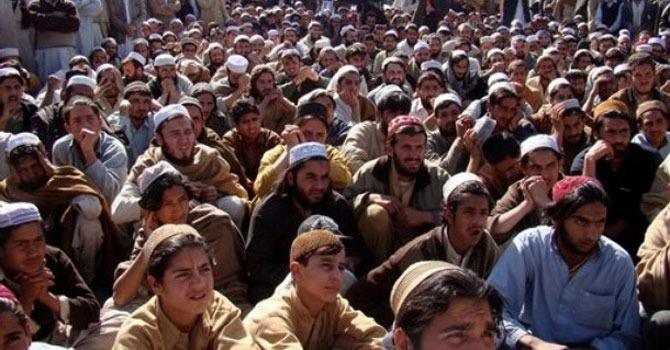
When Operation Sarbakaf started in Mamund on 29 June, to drive out Tehreek-i-Taliban Pakistan (TTP) militants from the area, the region had already been suffering from kidnappings and ransom networks, as well as foreign fighters entrenched in local villages, for months. In response, protests led by youth groups became a Qaumi Jirga that called for negotiations with the militants. Yet this “peace jirga,” rather than reflecting real community will, quickly came to be seen as a mechanism that blurred responsibility between the state, tribal leadership and militant groups.
On 2 August, the jirga sat with the TTP commanders Muhammad Ilyas and Malang Bacha. Its demands were straightforward vacate civilian areas, end extortion and repatriate foreign militants. But participants later confessed that the jirga put forward these demands in the name of the government of the KP, but not the community. The jirga, deprived of the traditional autonomy, tried to project the state authority that it lacked. Meanwhile, TTP pushed its own maximalist demands, including enforcement of Sharia in their areas and disarming state patrols conditions impossible for the provincial government to agree to. When talks broke down, violence resumed.
Haroon Rasheed, the political figure spearheading the jirga, went further – he publicly defended TTP’s demand of Sharia and said he had trust from its leadership. By the time the operation was resumed, evacuees who thought the jirga’s constant assurances of “progress” had lost precious time to evacuate. The Bajaur jirga failed, however, not because of some militant intransigence, but because it acted under a false mandate, disguising elite ambitions as community consensus and allowing militants to set the terms of engagement.
Jirgas Are Not Monolithic and Bajaur Shows Why That’s Important
Part of the problem in analyzing Bajaur is the temptation to accept jirgas as homogeneous tribal institutions. In reality, there are jirgas with many geographical and tribal variations, political culture, and relation to the state. Some look like community arbitration forums; others are sort of quasi-political authorities; and others serve as extensions of state power.
In conflict areas, jirgas increasingly work within hybrid forms of governance no longer autonomous but incorporated in military strategies, bureaucratic patronage or as part of political parties. Bajaur exposed how easy it is for a jirga to lose legitimacy as its social base is split and its mediators assert legitimacy that they do not have.
Militant Violence, Transnational Networks and the Collapse of Traditional Authority
The end of the power of jirga did not start in Bajaur. It started after 9/11 when Al-Qaida, Afghan Taliban and the foreign fighters took sanctuary in Pakistan’s tribal districts. Jirgas that used to be based on moral authority were suddenly confronted with actors that had access to transnational safe havens, ideological rigidity, and superior capabilities to employ coercion.
From 2001 to 2015, over a thousand elders, who are the keepers of the local consensus, have been assassinated. The Taliban’s systematic targeting of maliks was not accidental, but was an intentional dismantling of the sociopolitical structure that sustained indigenous dispute resolution. Once stripped of its custodians and under militant watch, the jirga became open to manipulation as was the case in Waziristan and Swat, and now Bajaur.
The Political Challenge: New Voices, New Legitimacies
The emergence of Pashtun Protection Movement (PPM) added a new level of contestation. Unlike militants, PPM took a political stand against jirgas they criticised them as relics of colonial Frontier Crimes Regulation and tools of state coercion. By holding mass rallies which they called “Qaumi Jirgas”, PPM introduced a new kind of collective representation based on a civil rights discourse instead of tribal hierarchy.
This shift is important: legitimacy in Pashtun society is no longer the sole prerogative of elders: it is interspersed among youth leaders, activists and transnational networks.
The Massive Debate: Reform, Integrate, or Retire?
The Bajaur episode raises an old dilemma: What role should the jirgas play in the contemporary landscape of governance in Pakistan? Courts have criticized them for violating constitutional rights; human rights groups have denounced their gender biases; militants see them as proxies of the state; communities distrust their politicization.
Yet jirgas continue to exist because they have never been replaced by the state with any reliable institutions and institutionalized in the legal system. Bajaur has shown that a jirga without independence is worse than without a jirga at all. It is used as a tool of manipulation not mediation.
Pakistan is now faced with a critical choice. Either integrate jirgas into the framework of a rights-respecting legal system with lessons to be learned from Somaliland, Rwanda and Bolivia or phase out their quasi-judicial role and bolster formal justice systems. The answer cannot be found in the yearning of tradition or fear of modernity, but in a sober recognition that lost legitimacy cannot be manufactured with a false mandate of peace.